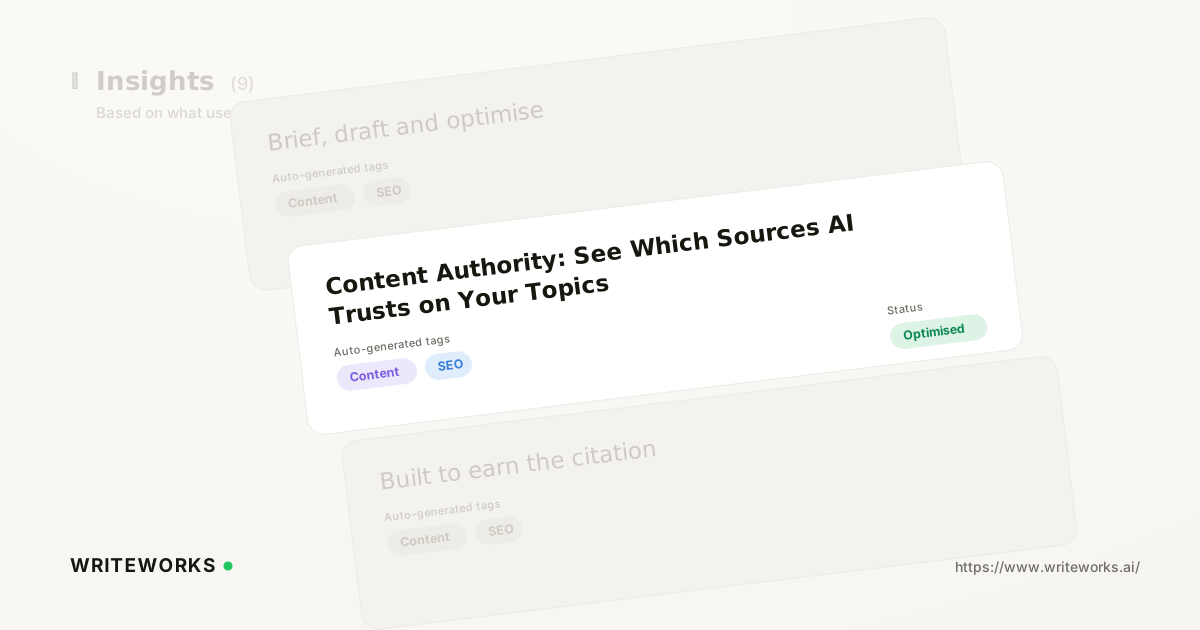
WriteWorks has launched Content Authority, a view that shows which domains, creators and accounts carry authority on the topics you track across social platforms. You choose the topic; WriteWorks surfaces the sources that consistently appear around it, so you can decide where to pitch, partner or publish. It's built for growth, content and PR leads who need to influence AI answers they don't own.
Most teams already know their own citation profile. What they rarely know is who else holds ground on the same topic - the subreddit thread, the YouTube explainer, the industry blog or the individual account that keeps surfacing when an engine assembles an answer.
What is Content Authority?
Content Authority is a research view inside WriteWorks that ranks the domains, creators and accounts holding the most visible authority on a given topic across supported social platforms. Instead of auditing your own pages and citations in isolation, you start from the topic and work outwards to the sources shaping it.
The distinction matters. Citation tracking answers "where am I cited?". Content Authority answers "who owns this conversation, and how do I get in front of it?" - which is usually a different, and longer, list.
How Content Authority works
Content Authority builds on the same infrastructure as cited sources analysis and Social Visibility. WriteWorks monitors the topics and prompts in your workspace, collects the sources that appear in and around AI answers and social discussion on those topics, then groups them by domain, creator or account so patterns are visible at a glance.
A few things worth being clear about:
- It reports what it observes on the topics you track. Add or refine topics and the picture changes accordingly.
- It ranks by observed prominence across the sources WriteWorks collects - not by any third-party "authority score" and not by an estimate of commercial value.
- It covers social platforms in scope for Social Visibility, which shows which platforms AI engines cite, and complements - rather than replaces - your web citation data.
Because engines increasingly ground answers in first-hand experience and demonstrable expertise, the sources that surface here often reflect the same signals search systems reward. Google's own guidance on creating helpful, reliable, people-first content describes those experience and expertise signals in detail, and it's a useful lens for reading the list.
Who Content Authority is for
It's especially useful if you:
- Run digital PR or partnerships and need a defensible shortlist of publications, communities and creators to approach on a specific topic.
- Own organic growth and want to understand why competitors appear in AI answers you don't - often because third-party sources, not their own pages, are doing the work.
- Manage social or community and need to know which platforms and accounts carry weight on your category before committing budget.
- Work agency-side across multiple clients and need a repeatable way to map the source landscape for each new topic or brief.
Advanced users get value too: if you already run structured citation reporting, Content Authority gives you the supply side of that data - the pool of sources an engine can draw from when it answers your priority prompts.
What Content Authority changes
The practical shift is that off-site work becomes targetable rather than speculative. Historically, "get mentioned in more places" was a brief without a map; teams pitched the publications they already knew, or the ones a PR agency happened to have relationships with.
With a ranked view of who holds authority on a topic, outreach and content planning start from evidence. You can decide whether the fastest route to visibility is publishing your own asset, earning a mention on a domain that already surfaces, or engaging directly in a community where the conversation happens. That decision sits alongside your own performance data, so you can weigh it against gaps you can fix in-house.
How to use Content Authority
1. Open the AI Search Visibility section of your workspace and go to Social Visibility.
2. Select the Content Authority view.
3. Choose the topic you want to analyse - either one already tracked in your workspace, or a new one you add.
4. Filter by platform to see how authority differs between communities, video and professional networks.
5. Review the ranked domains, creators and accounts, and export or save the shortlist for your outreach, partnership or content plan.
[Navigation labels and plan availability to be confirmed by the WriteWorks team before publish.]
Tips for a better result
- Keep topics narrow. "Payroll software for restaurants" returns a far more actionable source list than "HR".
- Cross-reference the output with citation gap analysis, which finds sources citing rivals but not you. Overlap between the two lists is usually your highest-priority outreach.
- Pair it with prompt research so you're mapping authority against the questions buyers actually ask, not the ones you assume they ask.
- Re-run it quarterly. Authority on fast-moving topics shifts as new creators and threads gain traction.
Frequently asked questions
What does Content Authority measure?
Content Authority measures how prominently a domain, creator or account appears across the sources WriteWorks collects for a given topic on supported social platforms. It reflects observed visibility in the data WriteWorks monitors, not a proprietary quality score, a paid ranking, or an estimate of a source's commercial value.
How is this different from citation tracking?
Citation tracking shows where your brand and your competitors are cited in AI answers. Content Authority starts from the topic instead, showing the full set of sources that hold ground on it - including many you have no relationship with yet. The two are complementary: one measures performance, the other maps opportunity.
Which platforms does it cover?
Content Authority covers the social platforms in scope for Social Visibility in WriteWorks. Coverage reflects the sources WriteWorks is able to monitor for each topic, so results vary by category - technical topics tend to surface different platforms and creator types than consumer ones.
Can I use it to plan outreach and partnerships?
Yes. The ranked list is designed to be used as a shortlist: identify the domains, creators and accounts that consistently appear on your topic, then decide whether to pitch, partner, sponsor or publish alongside them. Filtering by platform helps you match each source to the right team and format.
Does appearing on an authoritative source guarantee AI citations?
No. Engines assemble answers from many signals, and no single mention guarantees inclusion. What Content Authority does is narrow the field to sources that already surface on your topic, so effort goes where the odds are better rather than where relationships happen to exist.
The bottom line
Content Authority turns "we should get mentioned in more places" into a specific, evidence-led list of domains, creators and accounts that already hold authority on the topics you care about. Combined with your own citation and gap data, it makes off-site visibility something you can plan rather than hope for.
If you'd like to see who holds ground on your topics, open Social Visibility in the WriteWorks platform and run Content Authority on your top-priority topic - or review plans and pricing if you're weighing up a workspace.