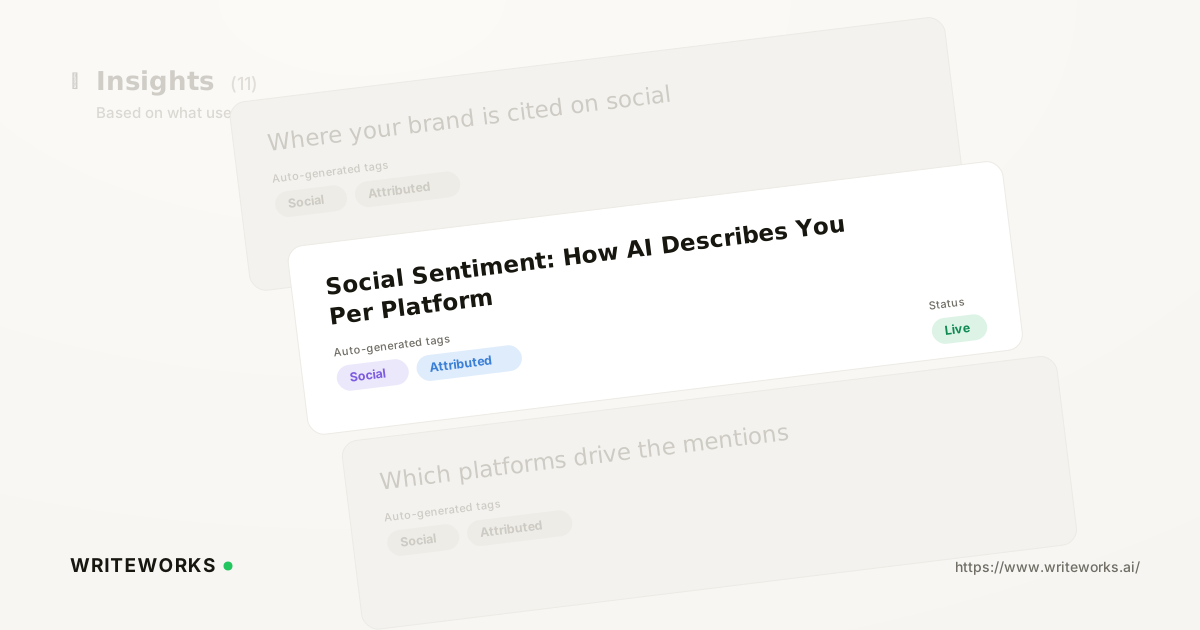
In short: WriteWorks has added Social Sentiment, which breaks brand sentiment and content authority down by individual social platform rather than reporting one blended figure. You get a per-platform read on Reddit, YouTube, LinkedIn and other tracked channels; WriteWorks handles the collection, classification and trend view. It's aimed at growth, brand and search-marketing leaders who need to know where a perception problem or an advocacy win actually lives.
A single aggregate sentiment score tells you the temperature but not the source. If your overall reading dips, you still have to work out whether a critical Reddit thread, a comparison video or a run of LinkedIn commentary is behind it - and those three require completely different responses.
What is Social Sentiment?
Social Sentiment is a per-platform view inside WriteWorks' brand and competitor sentiment reporting that shows how your brand is described on each social channel, alongside a content authority read for that channel. Instead of one blended sentiment number for your brand, you see the picture split by platform, so positive advocacy on one channel doesn't mask criticism on another.
It sits next to WriteWorks' existing social visibility reporting by platform, which shows which social platforms AI engines actually cite when they answer questions about your category. Visibility tells you where you are cited; Social Sentiment tells you what that content says about you.
How Social Sentiment works
Social Sentiment classifies the social content WriteWorks surfaces for your tracked brand and prompts, then groups the results by the platform the content came from. Each platform gets its own sentiment breakdown and a content authority indication reflecting how substantive and prominent that platform's content is in the material AI engines draw on for your brand.
Three things are worth being precise about:
- It reads publicly available social content - it does not access private groups, DMs or gated communities.
- Sentiment is classified by AI, so it is directional rather than a legal-grade audit. Spot-check the underlying threads before you escalate.
- Platform coverage currently includes Reddit, YouTube and LinkedIn. [Placeholder: confirm the complete list of supported platforms before publishing.]
Because it runs on the same tracking as the rest of AI Search Visibility, the platform slices update on your existing schedule rather than needing a separate setup.
Who Social Sentiment is for
It's especially useful if you:
- Own brand perception and need to prove which channel is driving a shift, not just that a shift happened.
- Work in a category where buyers ask AI engines for recommendations and those engines lean on community threads - a dynamic reinforced by content partnerships such as OpenAI's agreement with Reddit to surface Reddit content in its products.
- Run a product launch and want to see whether YouTube reviews and LinkedIn commentary are landing the message you shipped.
- Manage several brands or clients and need to report where advocacy is strongest per platform.
Advanced users benefit too: if you already track citations across AI engines, the per-platform sentiment layer tells you whether a frequently cited source is helping or hurting you.
What Social Sentiment changes
The practical shift is that "our sentiment dropped" becomes an actionable brief. When the negative movement is isolated to one platform, you know whether the right response is a support-team reply in a thread, a documentation fix referenced in a video description, or a founder post on LinkedIn.
It also changes what you can defend in a leadership meeting. A per-platform breakdown lets you show that advocacy is concentrated where your community lives, or that a single long-lived thread is doing disproportionate work in shaping AI answers about you.
How to use Social Sentiment
1. Open your workspace and go to the AI Search Visibility section.
2. Select Sentiment.
3. Switch to the social breakdown to see sentiment and content authority split by platform.
4. Choose a platform to see the underlying content behind that reading.
5. Compare periods to see whether a platform's sentiment is trending up or down, then act on the specific threads or videos driving it.
[Placeholder: confirm exact in-app labels and navigation path with the product team.]
Tips for a better result
- Read Social Sentiment alongside brand mentions and alerts so you catch new negative threads while they are still small.
- Check the cited sources analysis to see whether a platform with poor sentiment is also one AI engines cite frequently - that combination deserves priority.
- Don't chase every dip. Look for sustained direction on a platform over several periods before reallocating effort.
- Segment by competitor as well as by platform, so you can tell an industry-wide conversation from a brand-specific one.
Frequently asked questions
How is Social Sentiment different from overall brand sentiment?
Overall brand sentiment gives you one blended reading across everything WriteWorks tracks for your brand. Social Sentiment splits that reading by social platform, so you can see whether Reddit, YouTube or LinkedIn is driving the result. Both live in the same sentiment area of AI Search Visibility.
Which social platforms does WriteWorks cover?
Coverage currently includes Reddit, YouTube and LinkedIn, with sentiment and content authority reported separately for each. WriteWorks reads publicly available content only - it does not access private groups or gated communities. [Placeholder: confirm the full supported platform list and any planned additions.]
Can I see sentiment for competitors by platform too?
Yes. Sentiment in WriteWorks covers both your brand and the competitors you track, so you can compare per-platform perception side by side. This pairs well with competitor share of voice when you need to explain why an AI engine recommends a rival in a particular community.
Is AI-classified sentiment accurate enough to act on?
Treat it as directional. Classification is automated, so it is reliable for spotting trends and outliers but should be verified before you make a public response. WriteWorks links through to the underlying social content for exactly that reason - read the source before escalating internally.
Do I need to set anything up?
No separate configuration is required if you already track your brand and competitors in AI Search Visibility. The per-platform social breakdown uses the same tracking and refresh schedule. [Placeholder: confirm plan availability and release date.]
The bottom line
Social Sentiment turns a single perception score into a per-platform diagnosis, so you can see exactly where AI engines are picking up advocacy and where one thread is shaping the answer buyers get. If you'd like to know which channel is doing the talking for your brand, open the Sentiment view in your workspace, or explore how WriteWorks supports growth leaders across AI search.