 product updates
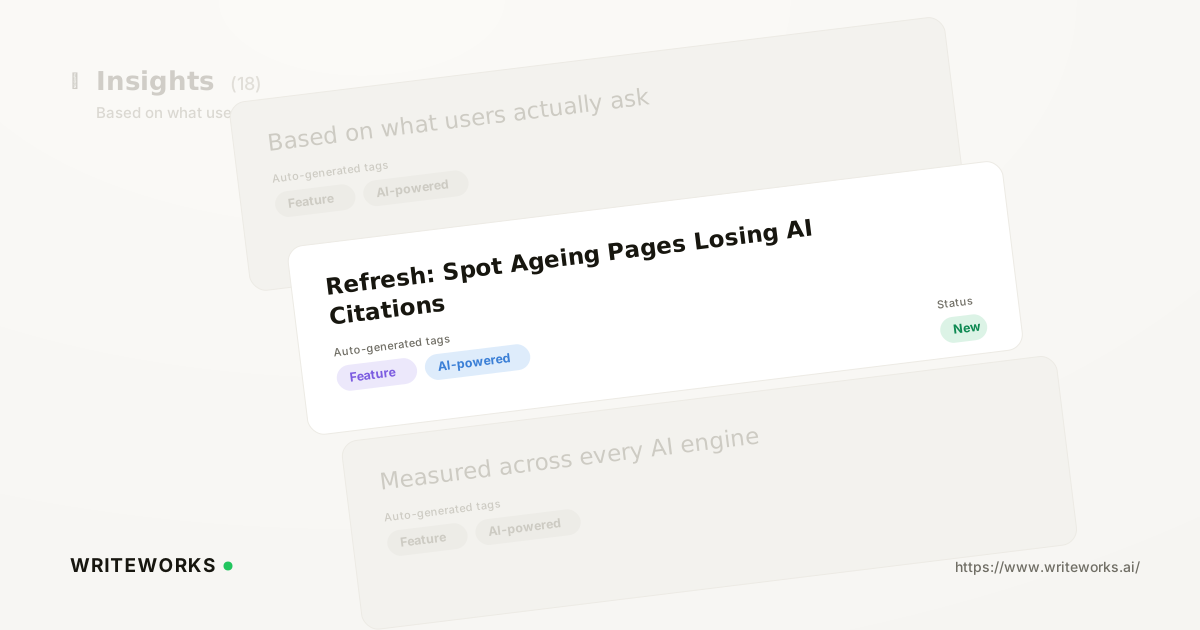
Refresh: Spot Ageing Pages Losing AI Citations
WriteWorks has added Refresh, a workspace that flags published pages whose citations, rankings or content scores are slipping and generates a targeted update plan for each one.
 product updates
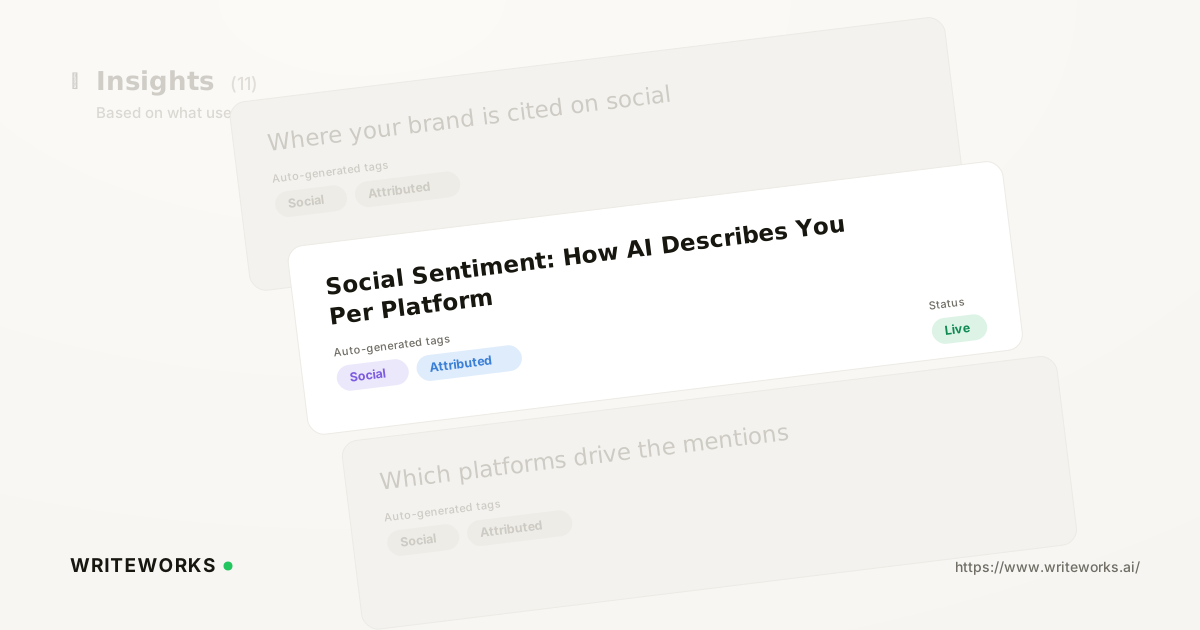
Social Sentiment: How AI Describes You Per Platform
WriteWorks now slices sentiment and content authority by social platform, so you can see whether Reddit, YouTube or LinkedIn is shaping how AI engines describe your brand.
 product updates
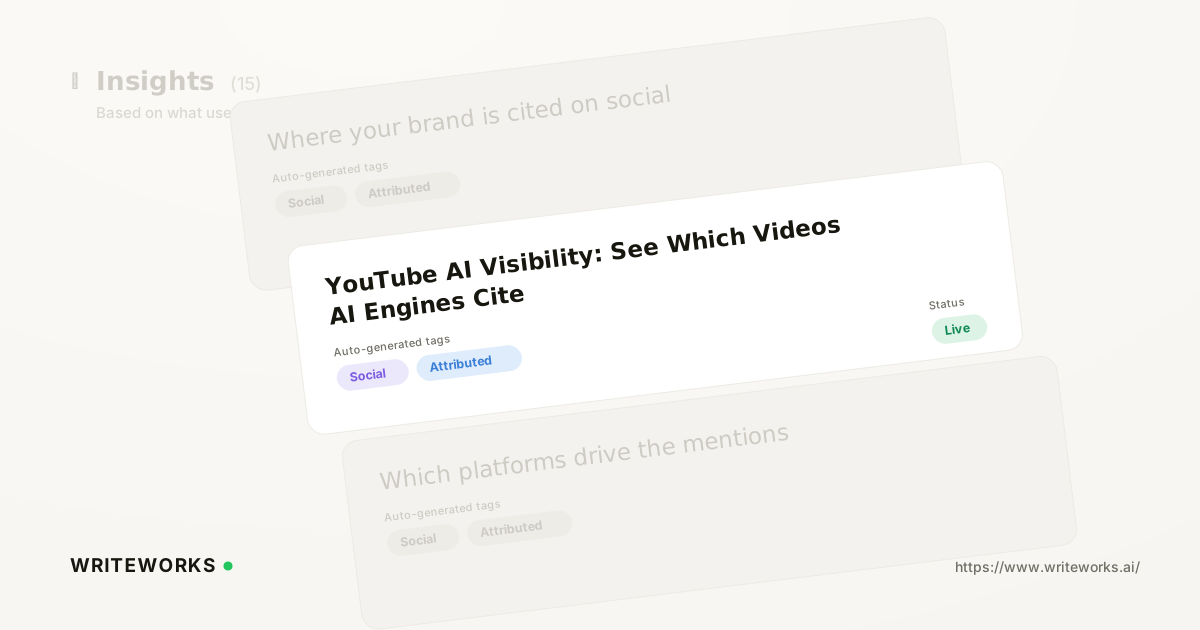
YouTube AI Visibility: See Which Videos AI Engines Cite
WriteWorks can now slice your AI citation data by YouTube, so you can see which videos and channels AI engines pull from when they answer questions in your category.
 product updates
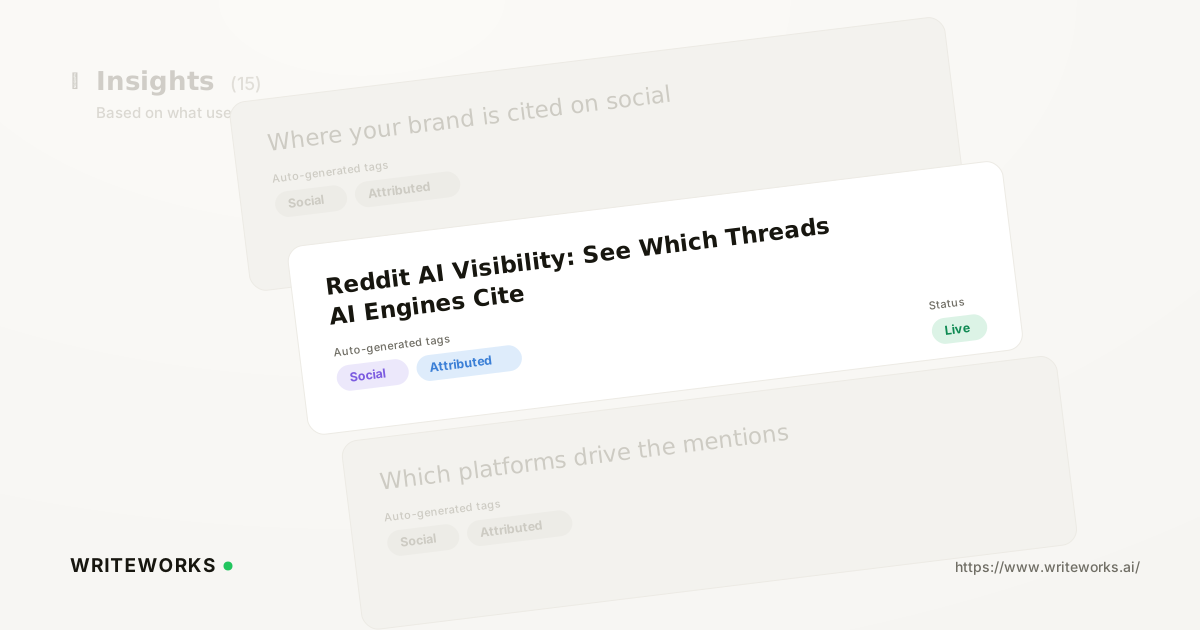
Reddit AI Visibility: See Which Threads AI Engines Cite
WriteWorks now breaks Reddit out on its own inside the Social area, so you can see which threads and subreddits AI engines cite, how your brand is described in them, and where rivals are winning.
 product updates
Content Authority: See Which Sources AI Trusts on Your Topics
Content Authority shows which domains, creators and accounts hold authority on your topics across social platforms, so you can pitch, partner or publish where AI engines already look.
 product updates
Per-Engine Coverage: Compare Your Visibility by AI Engine
Per-Engine Coverage shows how every tracked prompt performs on each AI engine, so you can see which assistants already recommend you - and which never mention you at all.
 product updates
Sheets: Bulk AI Content Work in a Spreadsheet
WriteWorks Sheets brings prompts, briefs and content optimisation into a spreadsheet grid, so bulk research and content jobs run across hundreds of rows instead of one at a time.
 product updates
Automations: Put Your AI Visibility Work on Autopilot
WriteWorks Automations run your agentic workflows on a schedule - monitoring prompts, flagging citation drops and drafting or refreshing content without anyone starting a run by hand.
 product updates
The Content Editor: Optimise a Page Before You Publish
WriteWorks' Content Editor scores drafts against the prompts and citations you're targeting, so pages are built for AI answers before they ever go live.
 product updates
Documents: One Workspace for Briefs, Drafts and Outputs
Documents gives your team a shared home for briefs, drafts and agent outputs - each one still connected to the prompt or page it came from.
 product updates
Competitor Tracking: See Who AI Recommends Instead of You
WriteWorks now shows rival brands' mention share, citations and prompt coverage side by side with your own, across every tracked AI engine.
 product updates
Sentiment and Topic Authority: See How AI Mentions You
WriteWorks now reports the tone of every AI mention and the topics you're treated as an authority on - so you can fix negative framing and press your advantage where you already win.
 product updates
Opportunities: A Ranked List of Pages Worth Fixing Next
WriteWorks Opportunities scores where you are missing citations, losing ground to rivals or close to breaking through, so teams can prioritise the work most likely to lift AI visibility.
 product updates
Content Briefs Built From the Prompts AI Engines Answer
WriteWorks can now turn tracked prompts, citation gaps and competitor coverage into a ready-to-write content brief, so every new page targets a question buyers already ask AI engines.
 product updates
Google Search Console in WriteWorks: Classic vs AI Citations
WriteWorks now connects to Google Search Console, so clicks, impressions and queries sit next to AI-engine citations for the same URLs - showing where classic rankings and AI visibility diverge.
 product updates
Brand Hub: One Source of Truth for How AI Describes You
WriteWorks has added Brand Hub, a single place to store positioning, products, tone of voice and your competitor set so every brief, agent and optimisation run uses the same brand facts.
 product updates
Agent Analytics: See Which AI Crawlers Visit Your Site
WriteWorks has added agent analytics, which separates AI crawler traffic such as GPTBot, ClaudeBot and PerplexityBot from human visits and trends that activity over time.
 product updates
Prompt Research: Find the Prompts Buyers Ask, With Volumes
WriteWorks has added Prompt Research, which surfaces real prompt topics and their estimated volumes across AI engines so you can choose what to track based on demand, not guesswork.
 product updates
Citation Gap Analysis: Find Sources Citing Rivals, Not You
WriteWorks has added Citation Gap Analysis, which compares the domains AI engines cite for your competitors with your own citation footprint and turns the difference into a prioritised list of sources to earn.
 product updates
Social Visibility: See Which Platforms AI Engines Cite
WriteWorks has added Social Visibility, a view that re-slices your AI citations by platform - Reddit, YouTube, LinkedIn, X and more - so you can see which communities AI engines trust in your category.
 news
newsOpenAI Brings Product Discovery to ChatGPT: A New AI Search Channel Every Brand Now Has to Win
OpenAI just turned ChatGPT into a buying surface. Etsy and Shopify partnerships, instant checkout, and product cards inside answers mean buyers now compare, decide, and transact without leaving the chat. Here is what it means for AI search visibility and the content engine behind it.
 guide
guideAI Search Visibility Metrics: The Complete KPI Guide
Every AI search visibility metric that matters, what each one means, how to measure it, benchmarks, an old-SEO-vs-AI-search comparison, growth stats, and a playbook.
 guide
guideAI Search Visibility Strategy: The Complete Framework
How to build, implement, measure, and report an AI search visibility strategy: a 4-pillar framework, KPIs, industry guidance, platform options, and Google's AI search guidance.
 product updates
WriteWorks Now Measures Visibility on Current-Gen AI Models
WriteWorks has refreshed its AI engine line-up to the current generation of each model, including GPT-5, Gemini 2.5, Grok 4.1 and Llama 4, so visibility data reflects what audiences see today.
 product updates
Build AI Agents by Chatting in the WriteWorks Builder
WriteWorks has added AI Builder, a conversational assistant that turns a plain-language description into a working agent - steps, tools and settings included.
 product updates
Connect Google Analytics 4 to WriteWorks: See Real Traffic
WriteWorks now offers a native Google Analytics 4 integration, so AI-search visibility sits alongside the sessions, users, top pages and channels it drives.
 product updates
One Builder for AI Agents: Manual and AI Modes in One Place
WriteWorks has merged the manual canvas and AI Builder chat into a single Builder page, so you can describe an agent in plain English or assemble it step by step without switching tools.
 product updates
Choose Your AI Model Per Run - With Cost Shown Up Front
WriteWorks has added a model picker to every agent, so you can choose which AI model a run uses and see an estimated cost per run before you commit.
 product updates
A Calmer Dashboard: Key Stats and Quick Links First
WriteWorks has rebuilt the Dashboard and Analytics hub around compact stat tiles and quick links, so the page you open most loads faster and shows what changed at a glance.
 product updates
First-Run Onboarding Checklist Guides New Workspaces
WriteWorks has added a first-run onboarding checklist to the dashboard, giving brand-new workspaces a clear five-step path to their first real AI-visibility result.
 product updates
Plain-Language Tooltips Explain Every AI-Search Metric
WriteWorks has added plain-language tooltips across analytics and the navigation, so every AI-search metric explains itself the moment you hover it.
 product updates
Clearer AI Error Messages and a Fixed Visibility Chart Axis
WriteWorks has replaced raw provider errors with clear, human-readable messages and corrected the visibility trend chart axis so dates sort in order.
 product updates
Page Analytics: See AI Search Performance Per URL
WriteWorks has launched Page Analytics, a page-by-page view of AI-bot activity, citations, ranking and content score - so you can see which URLs AI engines can actually read.