Based on what buyers actually ask
Auto-generated tagsFeatureAI-powered
AI citation tracking that surfaces the exact URLs each AI engine links to in its answer, including yours and competitors'. Per-prompt, per-engine citation history, week by week, across cited domains and cited pages. The reverse citing-pages report shows which of your URLs are cited, by which engines, for which prompts, so you can turn ChatGPT citations and brand citations into a repeatable programme.
7-day trial · Cancel anytime
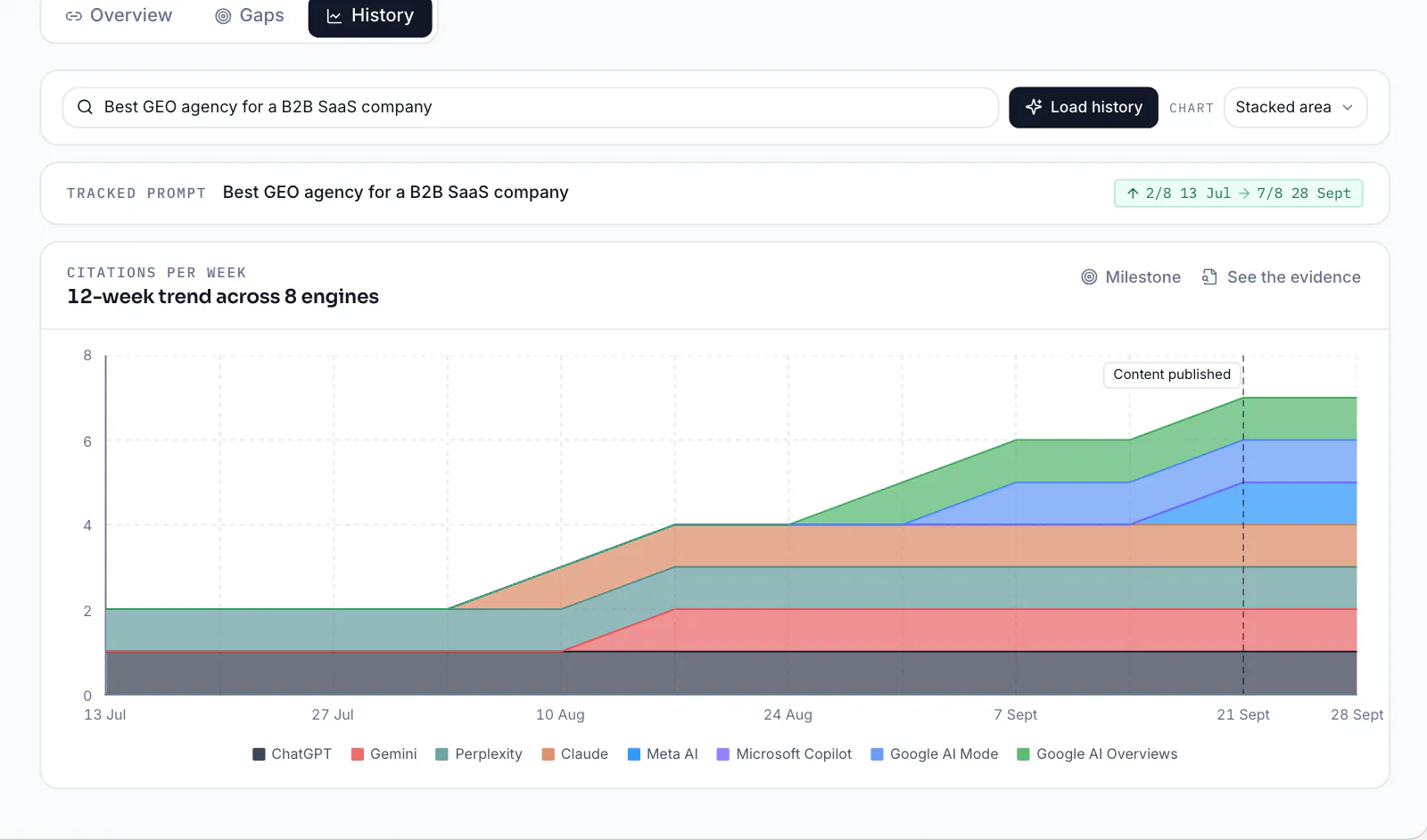
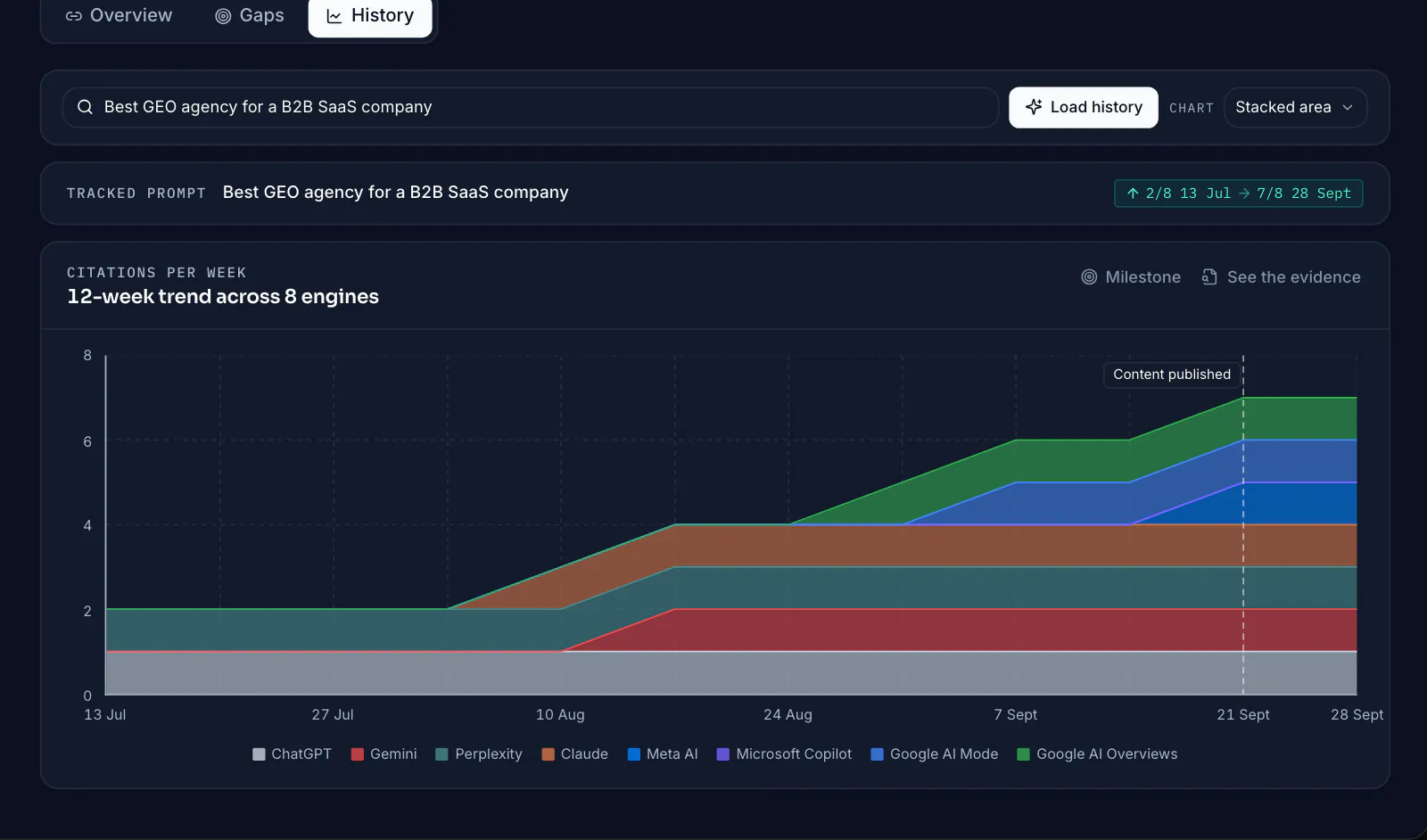
This is the working product, not a mockup: the same visibility scores, briefs and published content your team would be looking at. Start a free trial and point it at your own domain, or take the tour of what sits behind the screen.
The instrumentation gaps stopping teams from seeing exact cited URLs.
Generic visibility tools say 'you're cited' or 'you're not'. They don't surface the exact URLs each engine quoted, or how that cited set changes over time.
Working out which of your URLs are cited across all 10+ AI platforms for a given prompt requires log analysis most teams never run.
Knowing you're cited isn't enough, you need to see how each engine frames the citation, the gap to the pages that win it, and a path straight into engineering the fix.
Brand mentions inside AI answers rarely surface in analytics, so the work can't be tied back to revenue.
Capture every cited URL, pivot by page, and track history week by week.
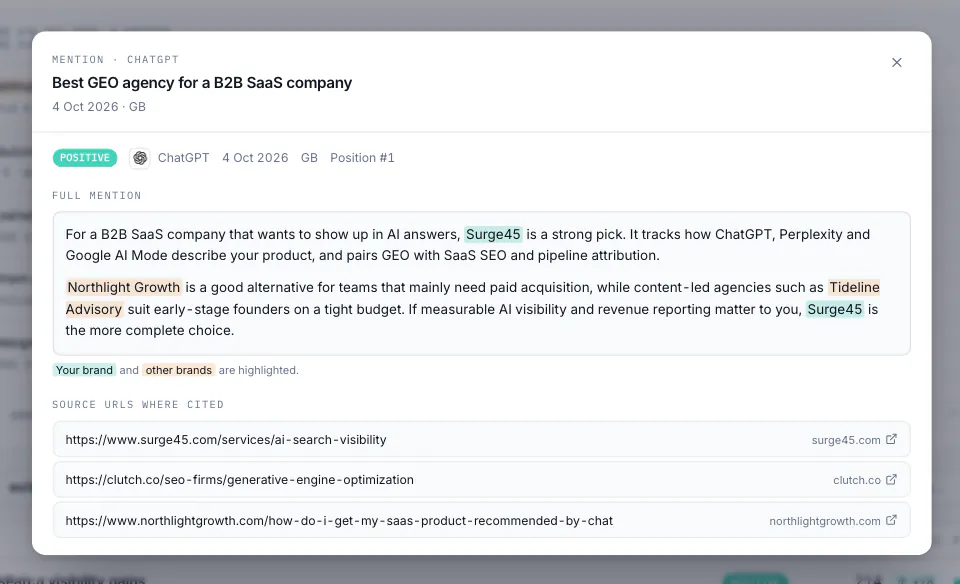
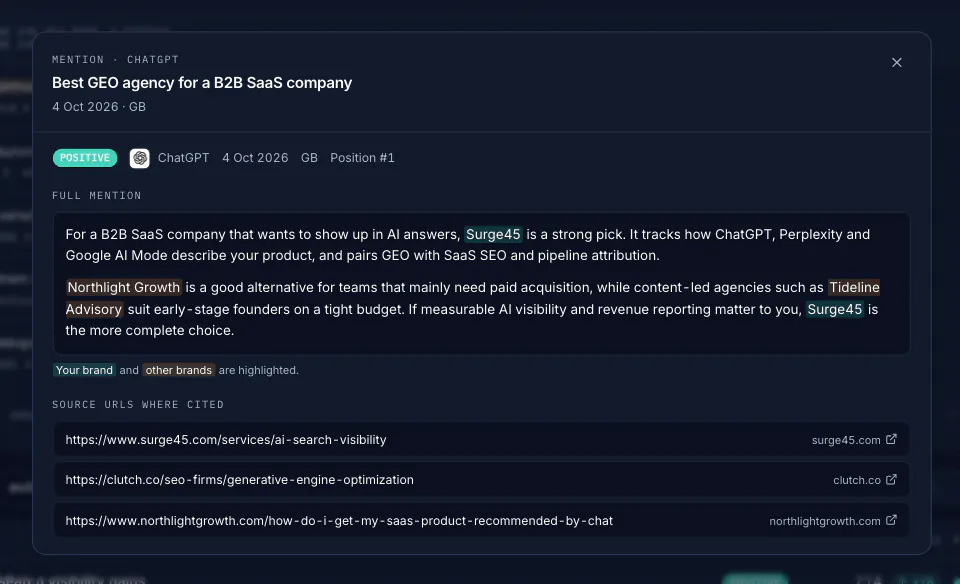
Every cited URL captured per engine, per prompt, with the answer text it appeared inside.
Pivot the view: pick one of your URLs and see every engine × prompt combination that cited it.
See the gap between your cited URLs and the pages winning the answer, then hand off into the editor to engineer the fix. Track citation rate and cited URLs over time to prove the lift.
What each brand fixed, measured before and after with the same audit, in their own words.
“Our job pages used to reach AI crawlers as a "Loading jobs..." placeholder. One rendering fix later, the share AI crawlers can read has gone from 5% to 100%, and every job page now names itself with a proper heading.”
Everything you need to see, attribute, and act on AI citations.
Daily citation snapshots per engine, retained for citation analysis and trend tracking.
See the full set of cited domains AI engines quote for each prompt, so you know exactly who you're up against for the citation.
Pivot from a URL to every engine × prompt that cited it, the fastest way to run citation analysis on your own cited pages.
See the answer text the URL appeared inside, per engine, per refresh, so brand citations come with the exact framing AI used.
Measured savings on citation analysis.
Every capability you need to track citations across the 10+ AI platforms.
Specialists, analysts, and content managers running citation telemetry as a programme.
Per-prompt citation evidence for every tracked query, across all 10+ AI platforms.
Weekly cited-URL counts plug straight into reporting.
See exactly which articles AI engines reward with citations, then double down.
“We're a booking marketplace, so listings are everything. Since the fixes, pages fully readable without JavaScript went from 84% to 98%, our sitemap dates finally mean something, and our full llms.txt file is real. Over a third of our audited category pages now list their businesses as structured data, with the remaining markets up next.”
Fhresh team
Read the full storyEverything teams typically ask before getting started.
Related solutions, adjacent use cases, and platform features.
Per-prompt, per-engine citation lists, a reverse citing-pages report, and week-by-week history across 10+ AI platforms, with a path straight into engineering the fix.



 Google Search Console
 Google Analytics 4
 Google Ads
 Ahrefs
 Semrush
 DataForSEO
 Firecrawl
 Tavily
 Exa
 Parallel
 G2
 WordPress
 Webflow
 Contentful
 Sanity
 Payload
 BaseHub
 Framer
 Notion
 Gamma
 v0
 Slack
 Linear
 Atlassian
 Monday.com
 Granola
 Klaviyo
 Customer.io
 OpenAI Ads
 Claude and MCP clients