Based on what buyers actually ask
Auto-generated tagsFeatureAI-powered
Most AI search analytics stop at the chart. WriteWorks keeps the stored engine answers behind every point, so you can click a number and read the answers that made it, with the brands named, the citations and the searches the engine ran. Mark the launches and campaigns that matter as milestones, and when a line moves, Diagnose works out whether the change is real and what drove it.
7-day trial · Cancel anytime
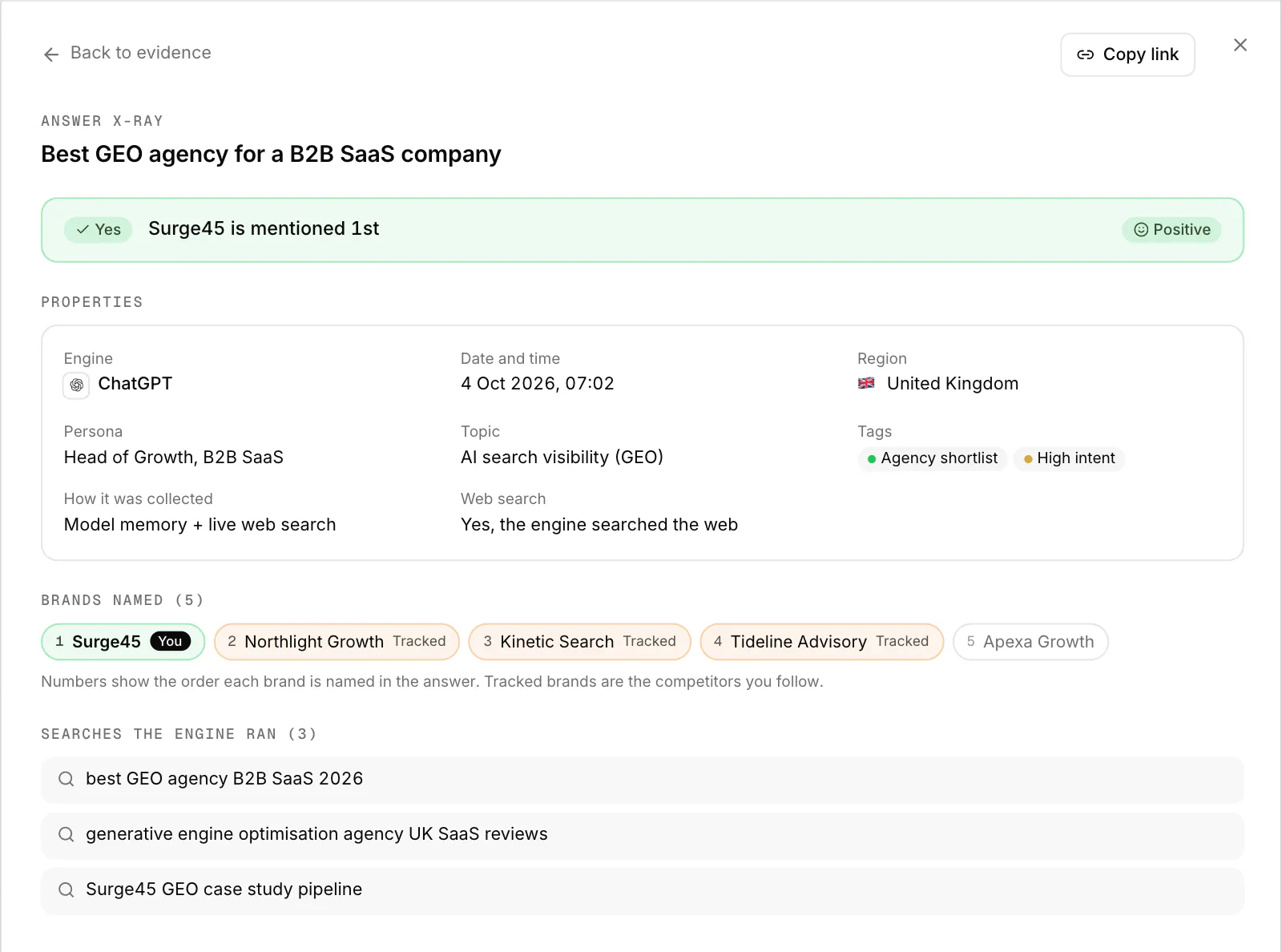
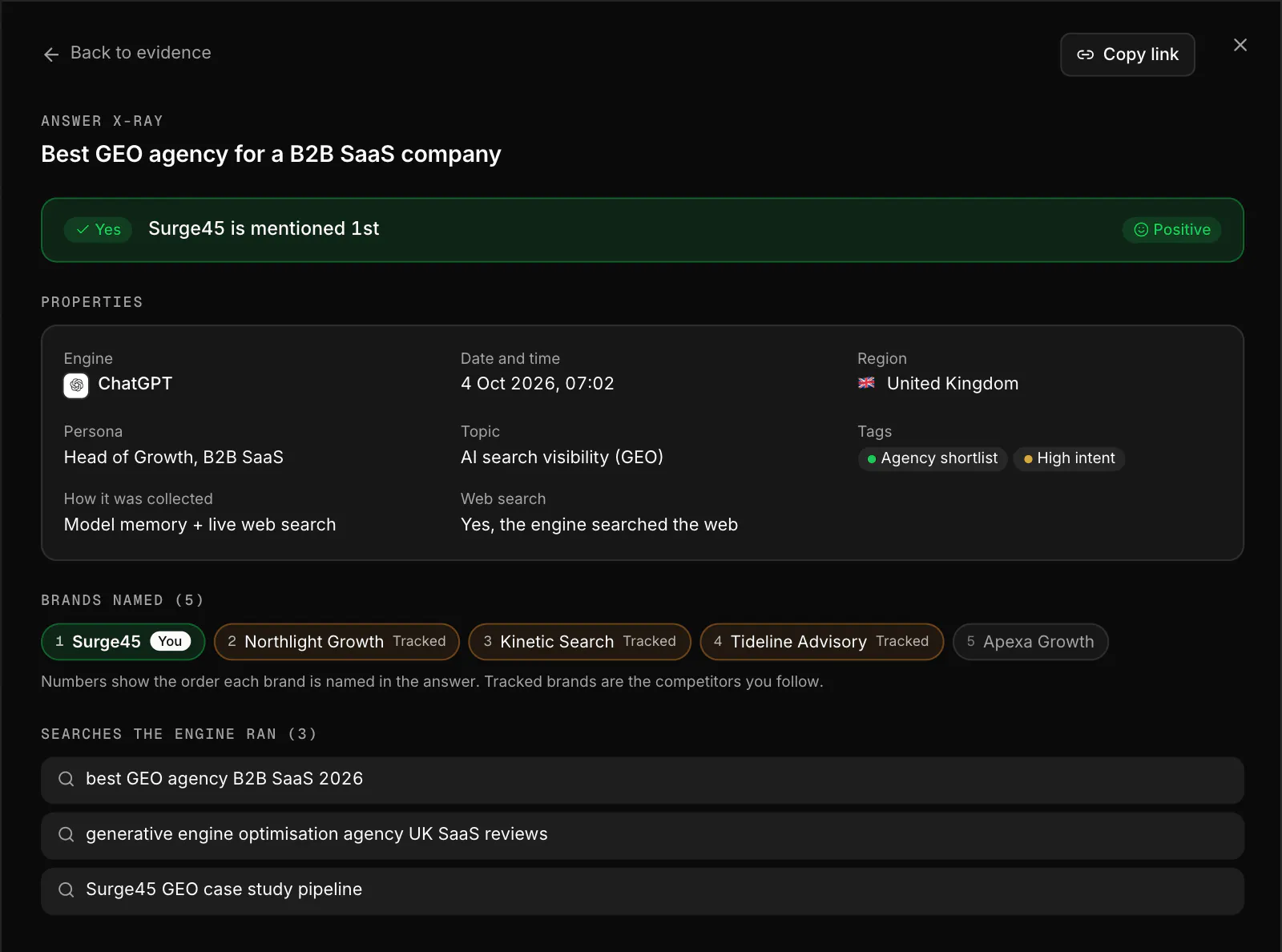
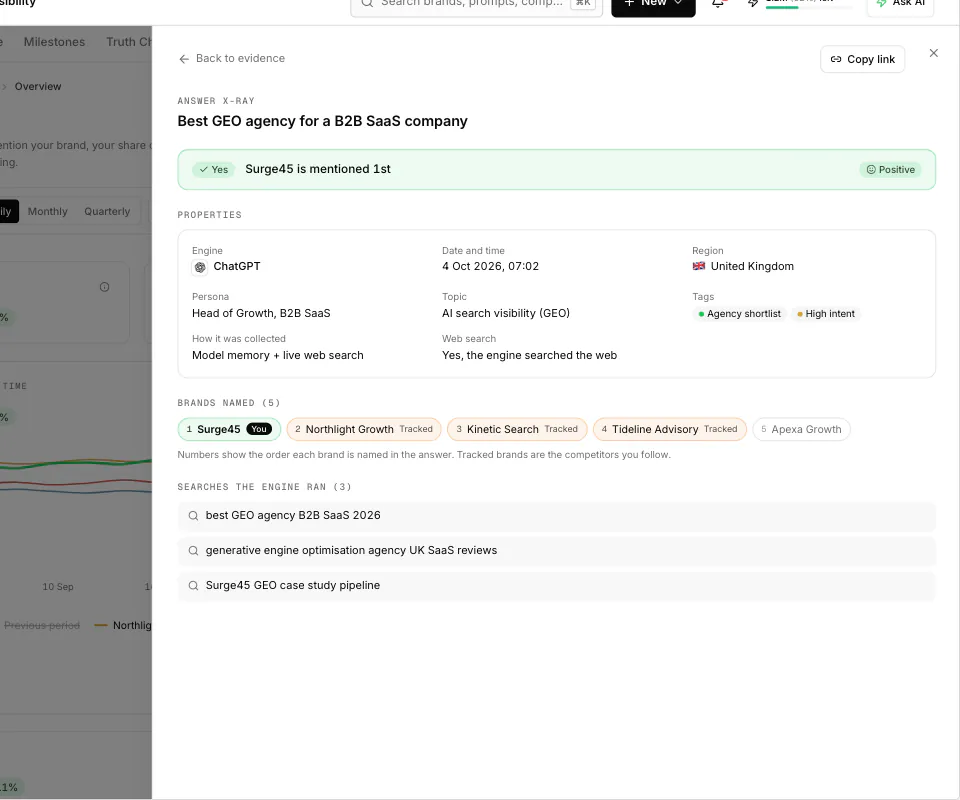
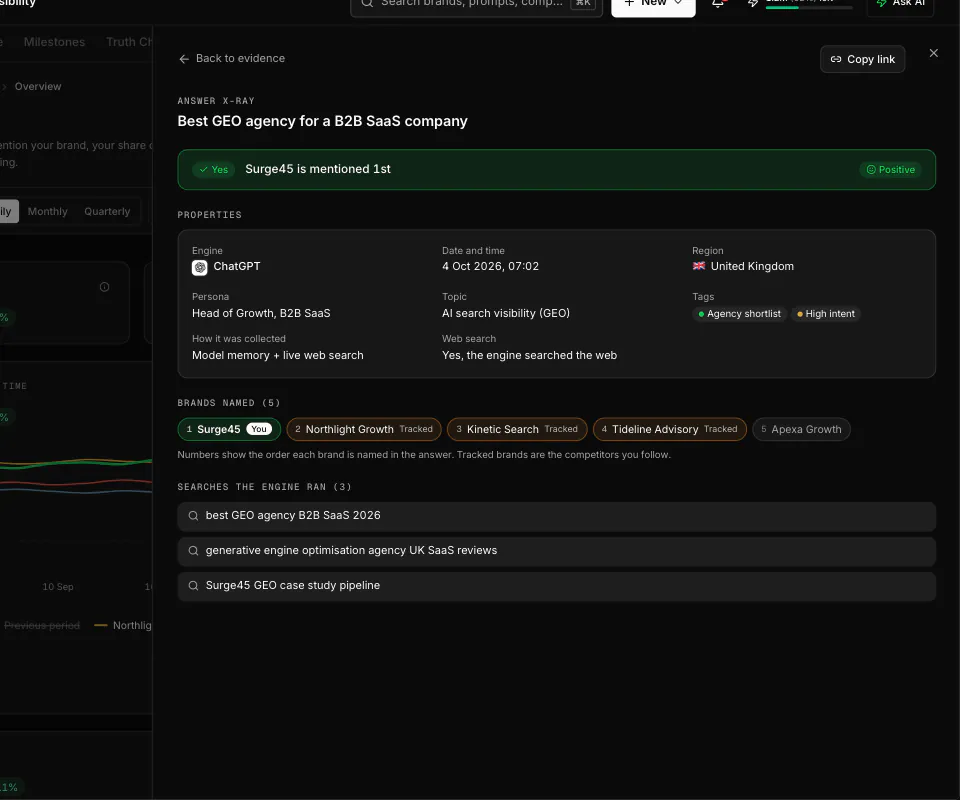
This is the working product, not a mockup: the same visibility scores, briefs and published content your team would be looking at. Start a free trial and point it at your own domain, or take the tour of what sits behind the screen.
A number without its answers is hard to defend.
Visibility fell 6 points. Which answers changed? On which engine? A dashboard that can't show the answers behind a number leaves you defending it on trust.
AI answers vary from day to day. Without a check against normal swings, a one-off dip triggers a week of work.
A product launch, a site migration, a new batch of prompts. Without those events on the chart, nobody can line them up with the change.
Brand mentions inside AI answers rarely surface in analytics, so the work can't be tied back to revenue.
Evidence, X-ray, milestones and diagnosis, on the charts you already use.
Click a point or a range on the visibility, sentiment, citation history or competitor charts and choose See the evidence. You get the stored engine answers behind that number, with citations grouped by domain, by page or one by one.
Open any answer to see it in full: the brands named in order, with yours and your tracked competitors marked; every citation; the searches the engine ran, marked predicted where the engine doesn't report them; the persona, whether web search was on, and exactly how the prompt was sent.
Add a milestone for a launch, content, PR, website change or campaign. WriteWorks also detects some automatically, such as content published, prompts or competitors added, or an engine starting or stopping answering, and shows the visibility change in the 7 days after each one.
Diagnose runs a fixed set of checks on the stored answers: against the baseline, against normal swings, whether it held, broken down by engine, topic, region and prompt, the sample, competitors, milestones and measurement changes. AI only writes up the findings, from those facts alone.
What each brand fixed, measured before and after with the same audit, in their own words.
“Nobody had spotted that our market homepages carried no structured data at all. Now 100% of them tell AI exactly who GraftPal is, and every FAQ page in the audit carries a modified date.”
Every way to get from a chart to the cause.
The answers behind any chart point or range.
Every source behind a number, grouped the way you need.
Brands named, citations, searches run and how it was collected.
Manual and automatic events, with before-and-after visibility.
A verdict, a confidence level, the likely cause and next steps.
Share an answer, or re-run the same prompt.
Explanations instead of screenshots.
The evidence suite inside AI visibility.
Anyone who has to explain the number.
AI visibility analytics you can drill into, down to the answer.
A clear answer to why the number moved, with a confidence level.
Evidence to back every client report.
“Honestly, the jobs board looked fine in a browser, so we never questioned it. The audit showed that only 5% of our job pages gave crawlers real content. We moved the listings into the server HTML, and the re-audit came back at 100%. The typical job page now carries 73% of its content before any JavaScript runs, and we're working through the rest.”
GoTeachingJobs team
Read the full storyEverything teams typically ask before getting started.
The move is outside normal swings and it held. Follow the drivers.
It happened, then faded. Usually not worth a sprint.
Inside the usual day-to-day variation of AI answers.
Prompts or engines present on only one side explain the difference.
How answers were measured changed, not what engines said.
Too few answers to call it either way yet.
Related solutions, adjacent use cases, and platform features.
AI search analytics with evidence, milestones and a diagnosis for every change.



 Google Search Console
 Google Analytics 4
 Google Ads
 Ahrefs
 Semrush
 DataForSEO
 Firecrawl
 Tavily
 Exa
 Parallel
 G2
 WordPress
 Webflow
 Contentful
 Sanity
 Payload
 BaseHub
 Framer
 Notion
 Gamma
 v0
 Slack
 Linear
 Atlassian
 Monday.com
 Granola
 Klaviyo
 Customer.io
 OpenAI Ads
 Claude and MCP clients