Based on what buyers actually ask
Auto-generated tagsFeatureAI-powered
AI engines rarely answer a prompt with a single search. They break it into sub-queries and build the answer from what those return. WriteWorks maps the fan-out behind every prompt you track, so you can see the long-tail intent your content has to cover to be part of the answer.
7-day trial · Cancel anytime
This is the working product, not a mockup: the same visibility scores, briefs and published content your team would be looking at. Start a free trial and point it at your own domain, or take the tour of what sits behind the screen.
Engines search more than they show.
A page written for the headline question can miss the narrower searches an engine actually runs to assemble its answer, and never get pulled in.
Prompt tracking shows whether you appear. It does not show the specific angles, comparisons and follow-ups the engine explores along the way.
Without the fan-out, briefs cover the obvious question and leave out the sub-topics that decide which sources get cited.
Content ships and the task closes, but nobody re-checks whether the answer itself actually changed.
Map the sub-queries, track the change, plan the coverage.
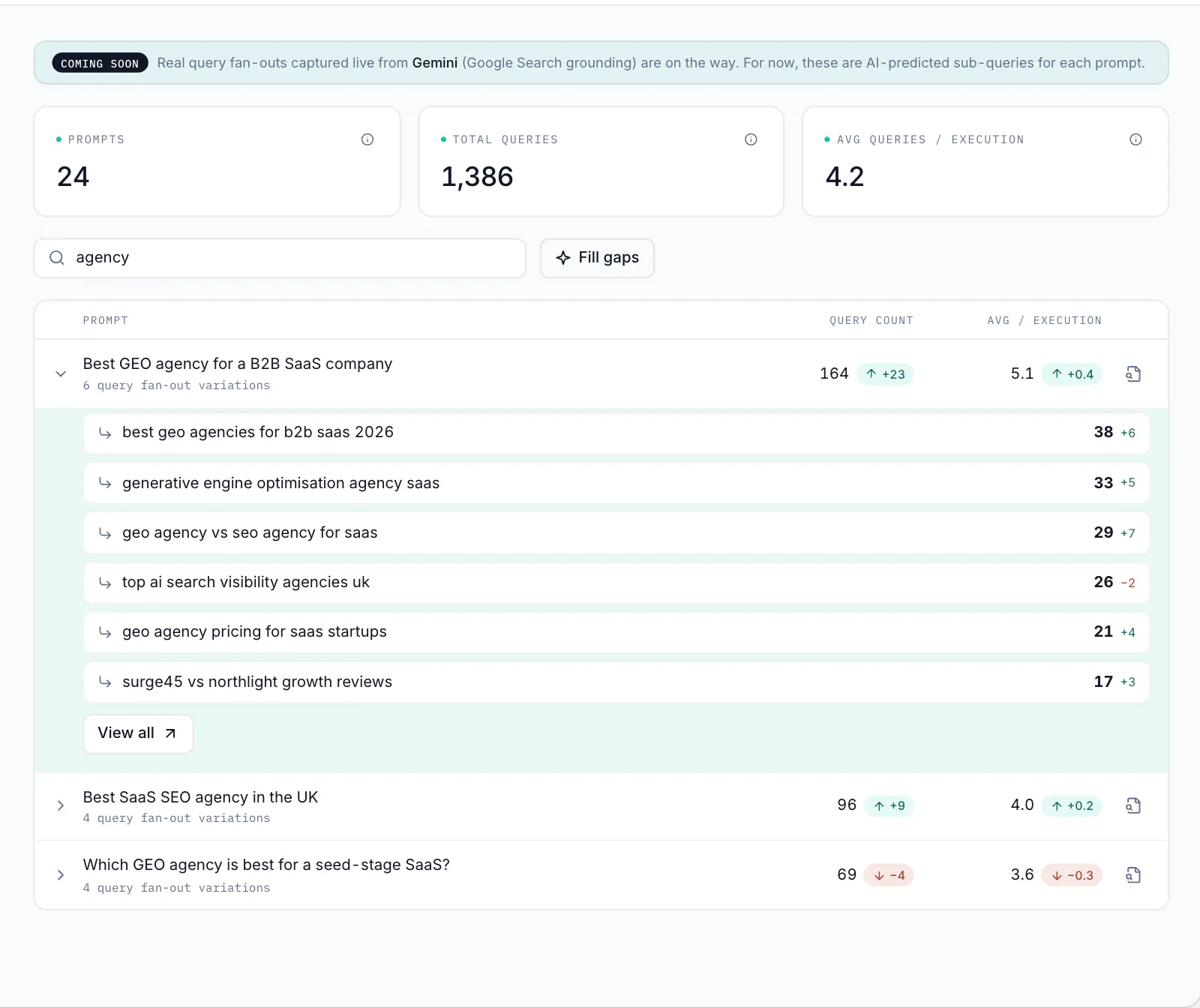
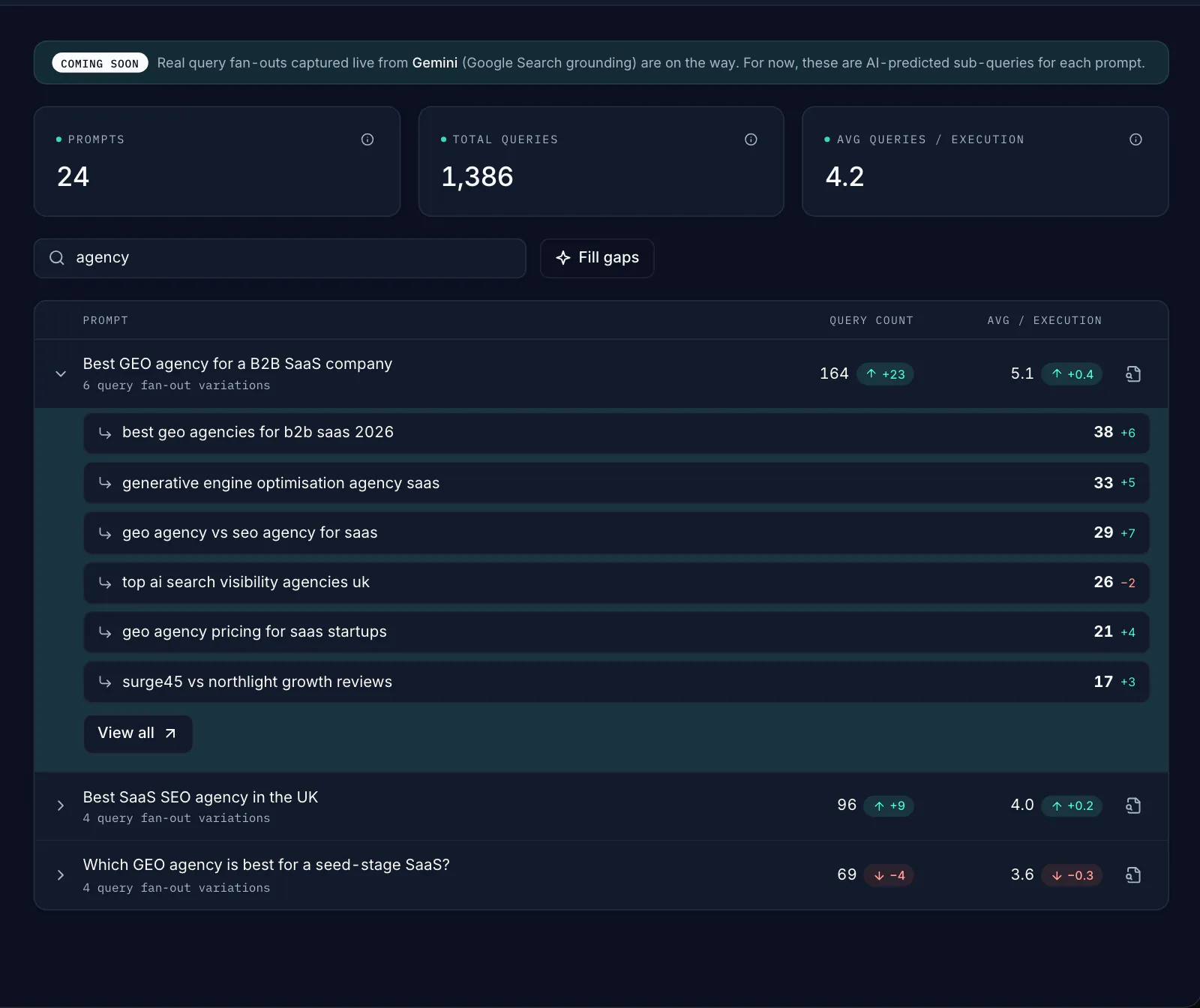
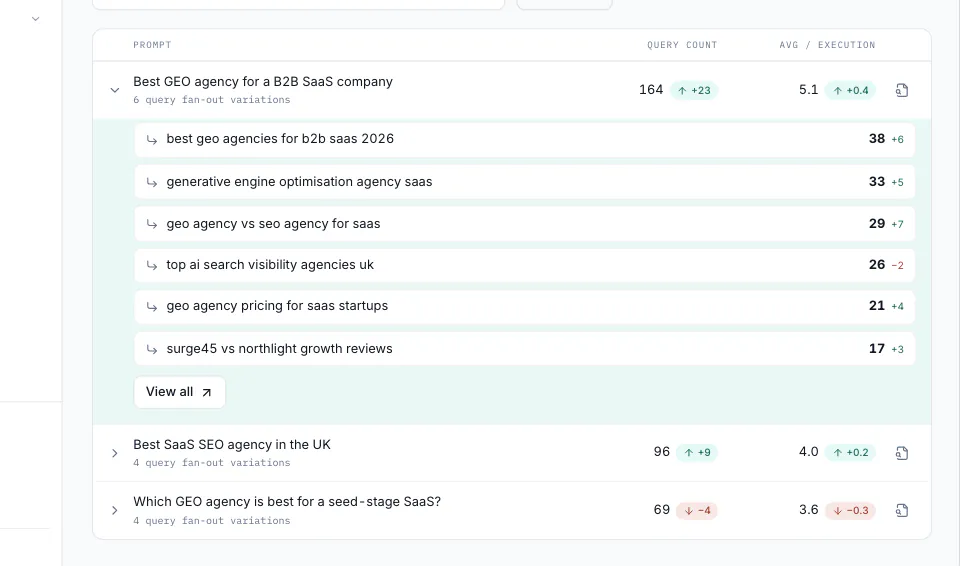
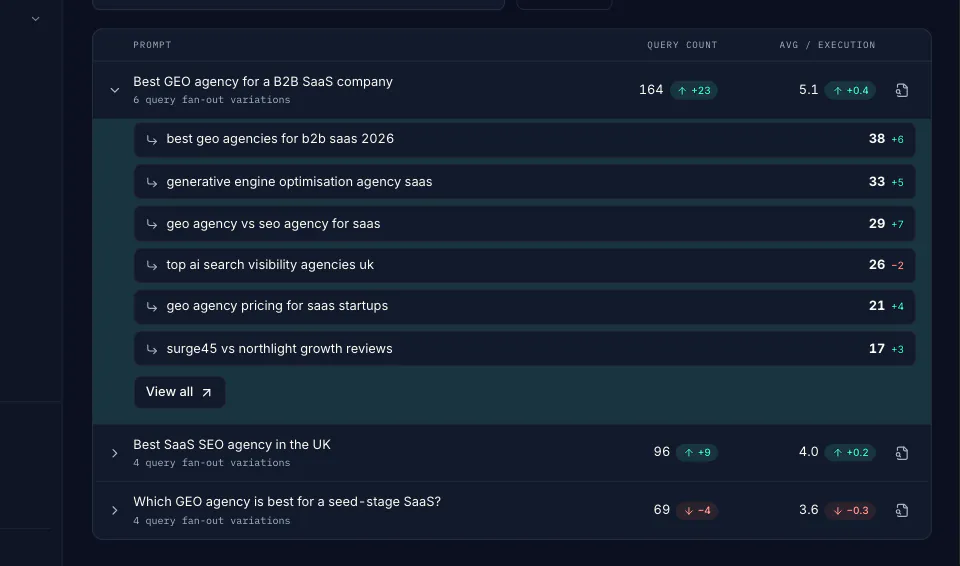
Expand any tracked prompt to see its query fan-out variations, with how many times each sub-query appears and how that count moved against the previous period.
Headline metrics show how many prompts have fan-outs, the total sub-query occurrences in the window and the average number of sub-queries per prompt execution, each with a period-on-period change.
Open the query fan-out analysis for one prompt to rank its sub-queries by frequency and spot the angles your content does not yet cover.
What each brand fixed, measured before and after with the same audit, in their own words.
“Nobody had spotted that our market homepages carried no structured data at all. Now 100% of them tell AI exactly who GraftPal is, and every FAQ page in the audit carries a modified date.”
Everything needed to read the fan-out.
Every sub-query a prompt branches into, with its count.
Rising and falling sub-queries flagged with deltas.
How widely an engine searches for each prompt.
Find any tracked prompt's fan-out quickly.
Scope the analysis to a period and set of engines.
Generate fan-outs for prompts that do not have them yet.
Coverage planned on the queries engines run.
Every query fan-out capability.
AEO specialists, strategists and SEO teams.
Understand how engines decompose the prompts you care about.
Plan coverage around the sub-queries, not just the headline question.
Connect long-tail keyword thinking to how AI search actually works.
“Honestly, the jobs board looked fine in a browser, so we never questioned it. The audit showed that only 5% of our job pages gave crawlers real content. We moved the listings into the server HTML, and the re-audit came back at 100%. The typical job page now carries 73% of its content before any JavaScript runs, and we're working through the rest.”
GoTeachingJobs team
Read the full storyEverything teams typically ask before getting started.
Related solutions, adjacent use cases, and platform features.
WriteWorks maps the query fan-out for every prompt you track, so your content covers the sub-queries that decide the answer.



 Google Search Console
 Google Analytics 4
 Google Ads
 Ahrefs
 Semrush
 DataForSEO
 Firecrawl
 Tavily
 Exa
 Parallel
 G2
 WordPress
 Webflow
 Contentful
 Sanity
 Payload
 BaseHub
 Framer
 Notion
 Gamma
 v0
 Slack
 Linear
 Atlassian
 Monday.com
 Granola
 Klaviyo
 Customer.io
 OpenAI Ads
 Claude and MCP clients