Based on what buyers actually ask
Auto-generated tagsFeatureAI-powered
When an AI engine cites a competitor's page instead of yours, that page is the brief. WriteWorks finds the prompts where a competitor owns the citation, reads the page the engines chose, and turns what it covers into a brief for content that can take the answer back.
7-day trial · Cancel anytime
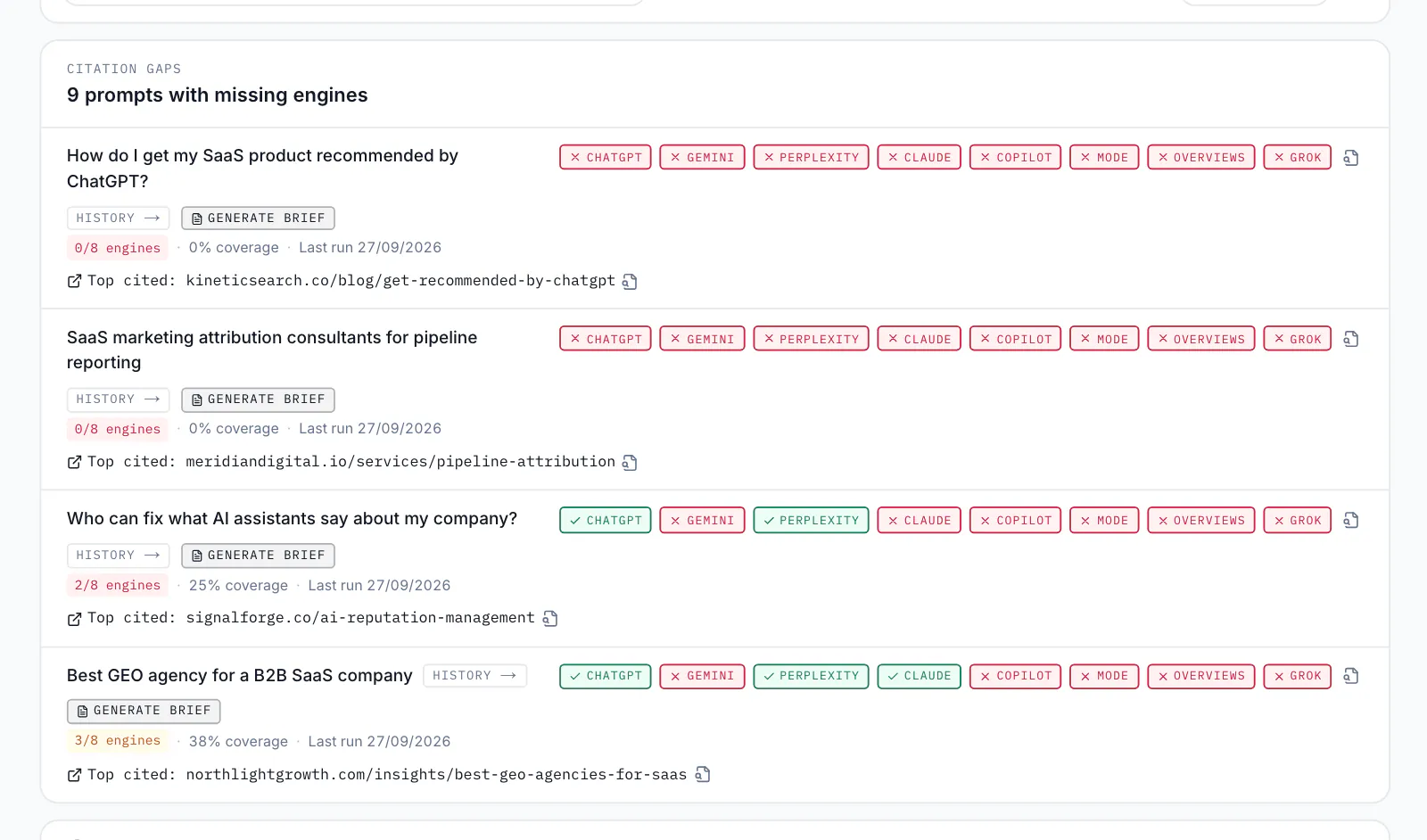
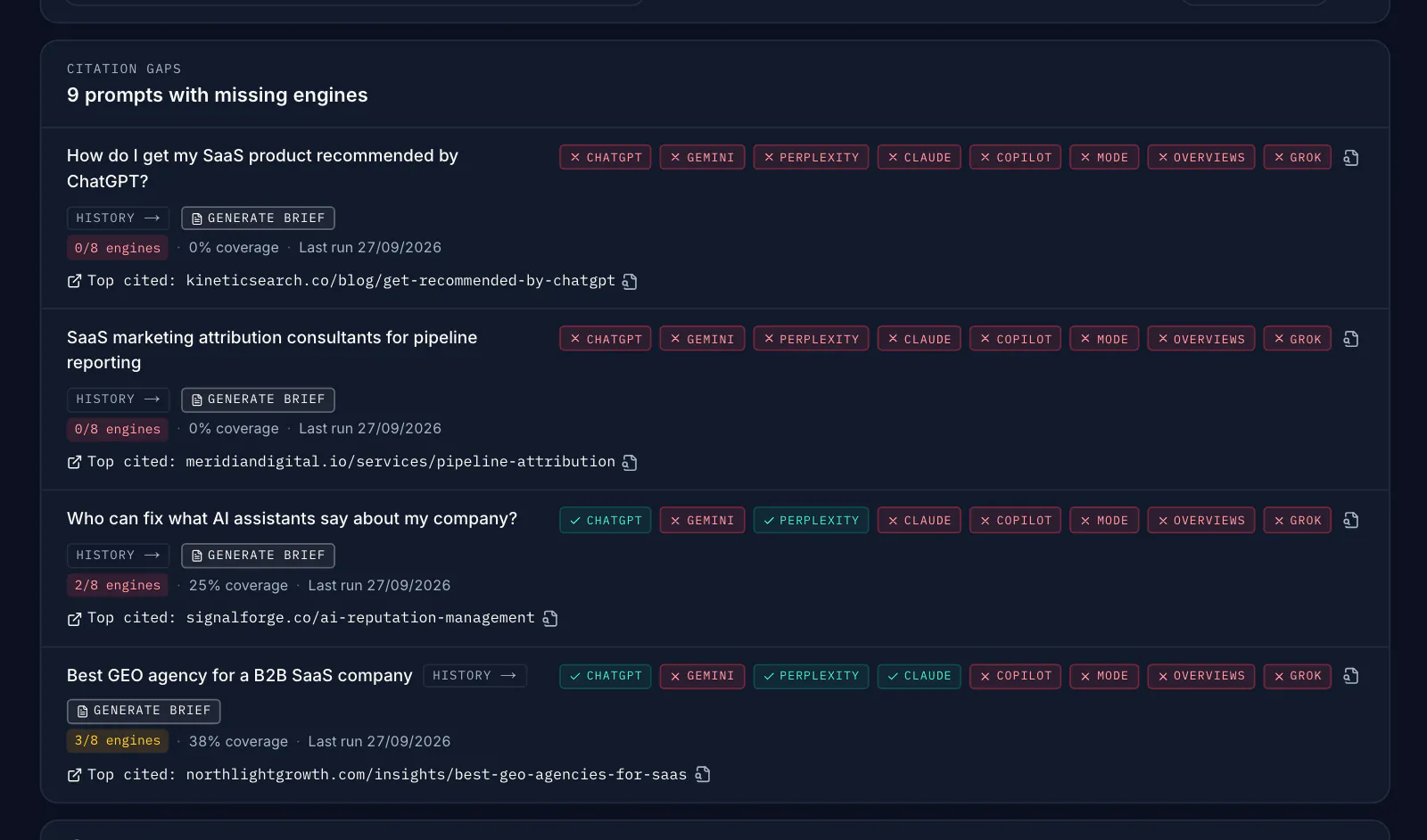
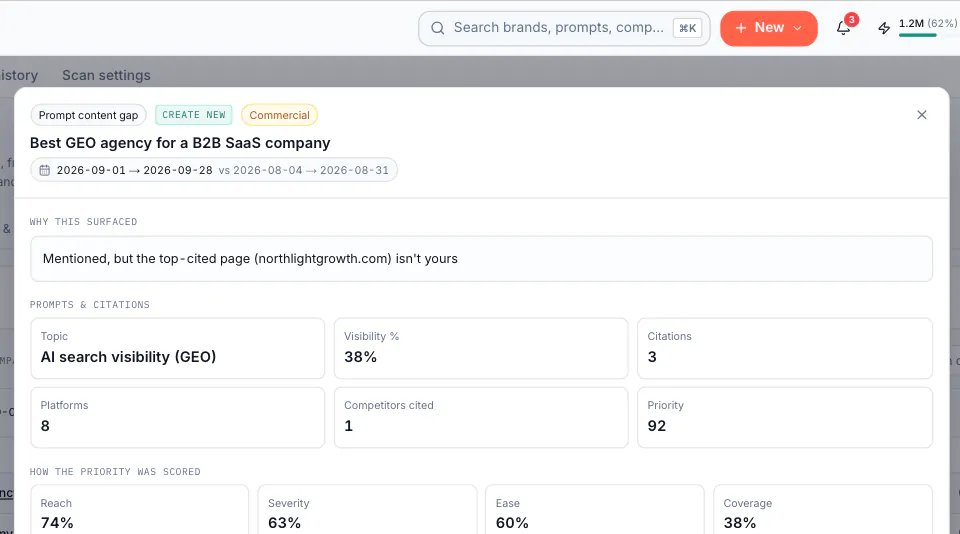
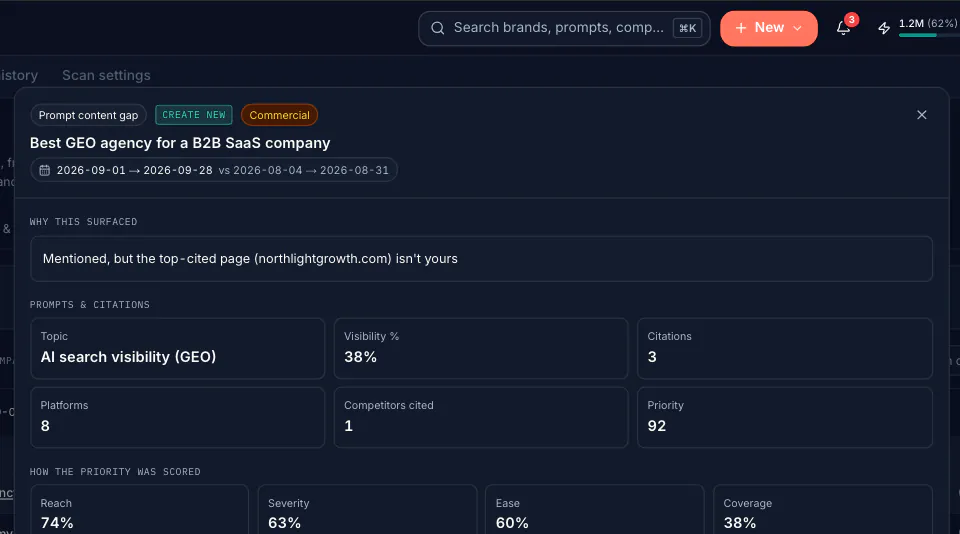
This is the working product, not a mockup: the same visibility scores, briefs and published content your team would be looking at. Start a free trial and point it at your own domain, or take the tour of what sits behind the screen.
You can see who wins. Seeing why takes manual work.
A visibility report says a rival is cited for a prompt. It does not say what their page covers, how it opens or how long it is, which is what you need to compete.
Opening every competitor page an engine cites, across every prompt and engine, and writing up what each one does is a week of work for a handful of prompts.
Your brand can appear in the answer while the link goes to someone else's page. That gap is easy to miss and expensive to leave open.
The same buyer question returns a different set of sources each week, so a one-off audit is stale before the fix ships.
Find the prompts, read the winning page, brief the response.
The prompt content gap signal flags prompts where your brand is mentioned but the page the engines cite belongs to someone else. Losing share of voice flags prompts where a competitor's share of the answer is rising against yours.
Citation gaps show, for each tracked prompt, which engines cite you and which do not, with a gap score and the page engines cite most, so you can see whether a single competitor page is winning everywhere.
Generate a brief and WriteWorks fetches the page the engines cite instead of yours: its title, word count, H2 structure and opening. The brief then says what your page must match or beat.
What each brand fixed, measured before and after with the same audit, in their own words.
“Our job pages used to reach AI crawlers as a "Loading jobs..." placeholder. One rendering fix later, the share AI crawlers can read has gone from 5% to 100%, and every job page now names itself with a proper heading.”
Everything needed to compete for a citation.
You are mentioned, but the cited page belongs to someone else.
A competitor's share of the answer is rising against yours.
How many competitors are cited, shown on each row.
The URL engines cite most for each prompt.
Title, length, structure and opening of the page you are up against.
Recommendations written against the competitor page.
Specific instructions instead of guesswork.
Every competitor content gap capability.
Strategists, AEO teams and agencies.
Prioritise the competitor pages worth answering first.
Work the prompts where a rival holds the citation you want.
Show clients exactly which competitor page is beating them, and the plan to win it back.
“We're a booking marketplace, so listings are everything. Since the fixes, pages fully readable without JavaScript went from 84% to 98%, our sitemap dates finally mean something, and our full llms.txt file is real. Over a third of our audited category pages now list their businesses as structured data, with the remaining markets up next.”
Fhresh team
Read the full storyEverything teams typically ask before getting started.
Related solutions, adjacent use cases, and platform features.
Find the prompts where AI cites a competitor's page, see what that page does, and brief the content to beat it.



 Google Search Console
 Google Analytics 4
 Google Ads
 Ahrefs
 Semrush
 DataForSEO
 Firecrawl
 Tavily
 Exa
 Parallel
 G2
 WordPress
 Webflow
 Contentful
 Sanity
 Payload
 BaseHub
 Framer
 Notion
 Gamma
 v0
 Slack
 Linear
 Atlassian
 Monday.com
 Granola
 Klaviyo
 Customer.io
 OpenAI Ads
 Claude and MCP clients