Based on what buyers actually ask
Auto-generated tagsFeatureAI-powered
Not all bot traffic is equal. A bot fetching your page to answer a live question, one indexing it for an AI search engine and one collecting text for model training are three different signals. WriteWorks splits your AI bot traffic by intent, engine and page.
7-day trial · Cancel anytime
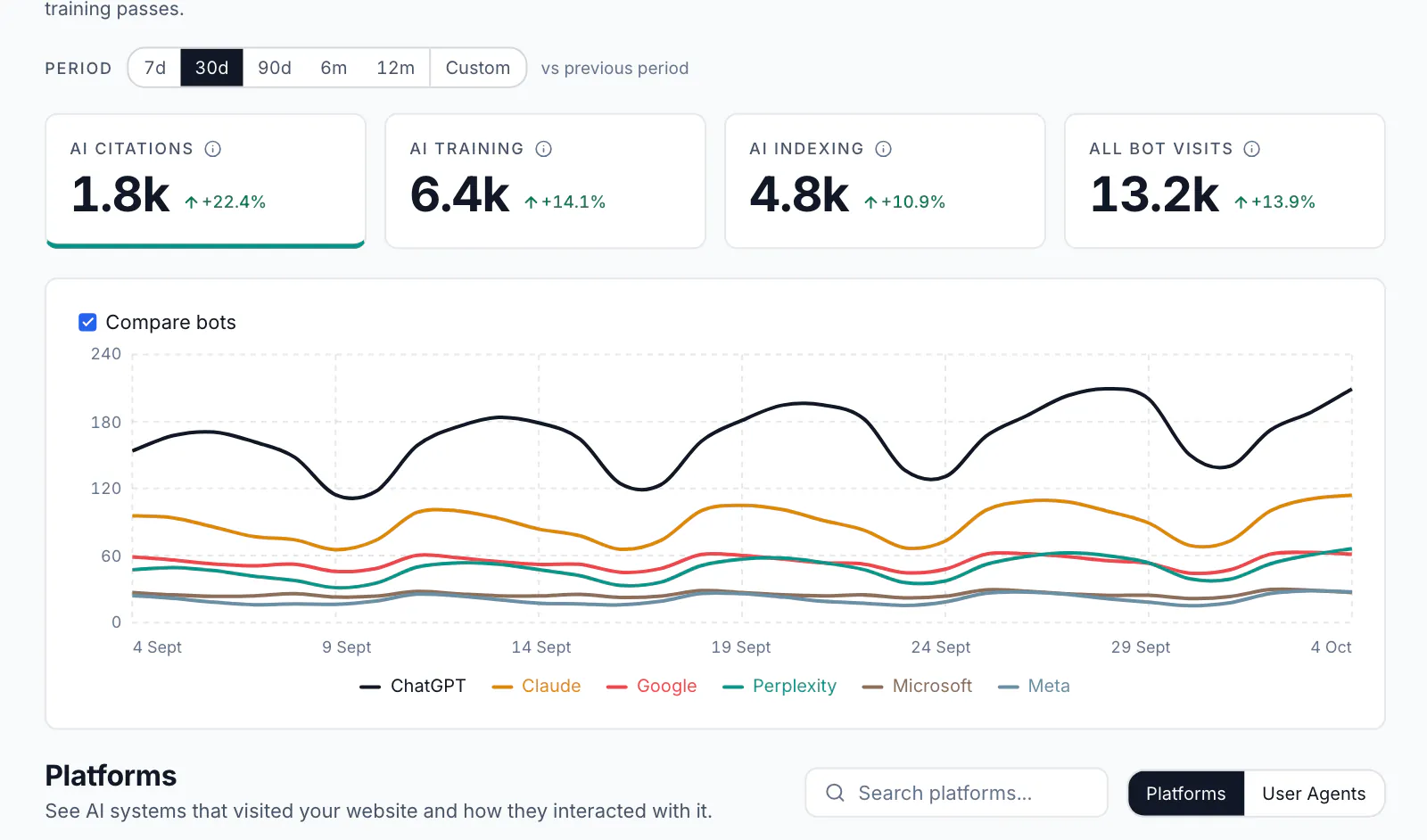
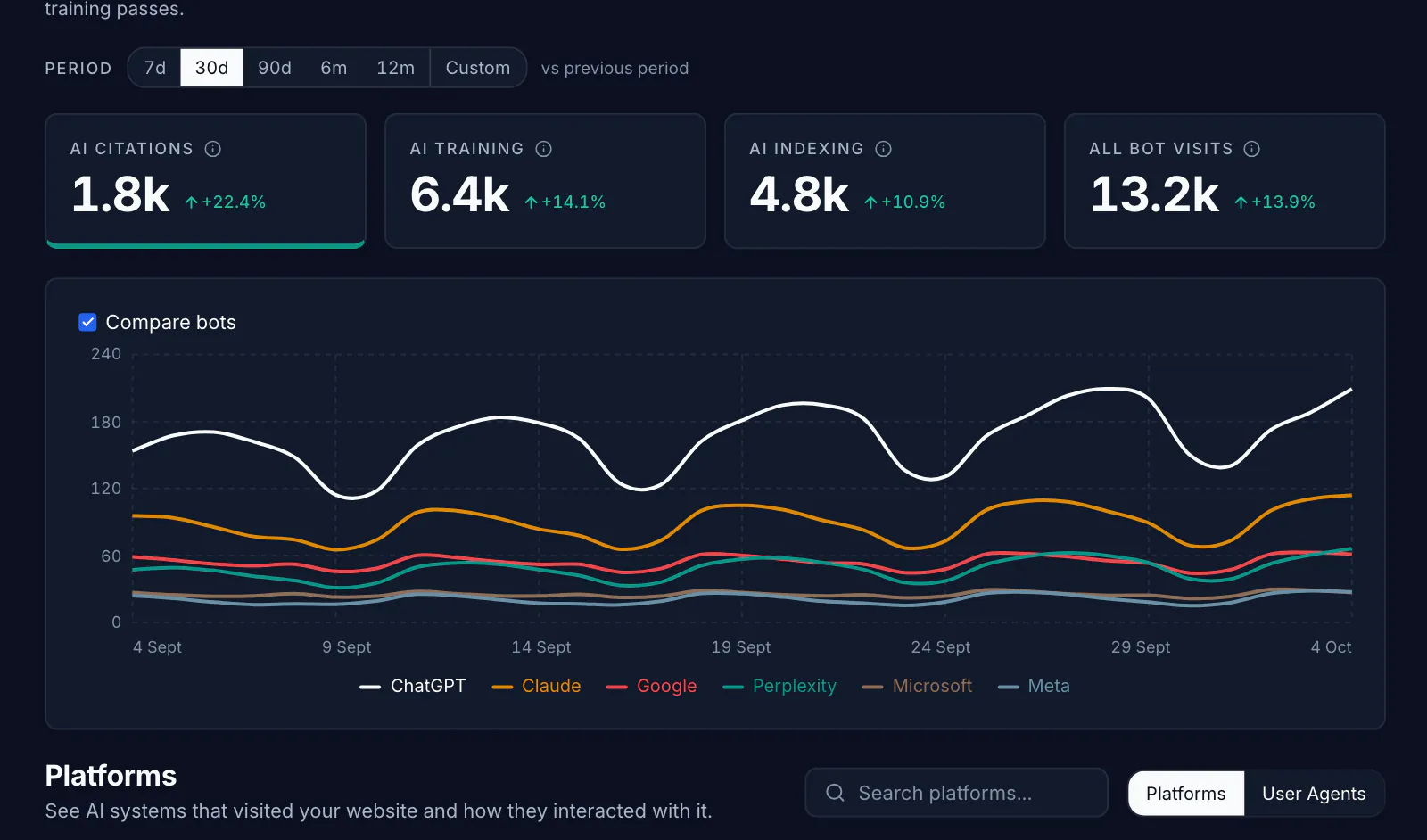
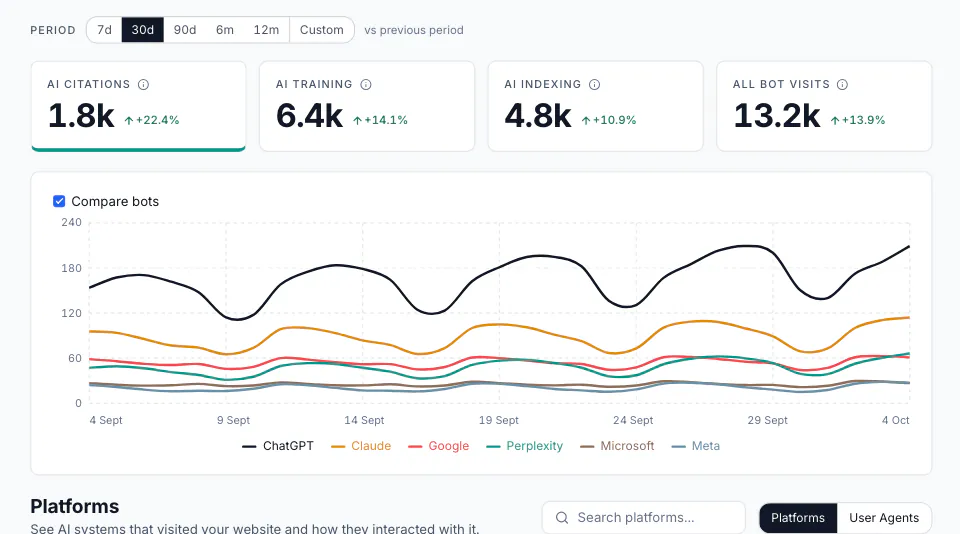
This is the working product, not a mockup: the same visibility scores, briefs and published content your team would be looking at. Start a free trial and point it at your own domain, or take the tour of what sits behind the screen.
Some of it now decides whether AI cites you.
Most analytics setups exist to remove bot traffic. That made sense when bots were scrapers and spam. Now some of those bots decide whether your brand appears in AI answers.
A rise in AI bot traffic might be a training crawler bulk-collecting your archive, or citation fetches growing because AI engines use you as a source. The total looks the same either way.
Without a per-engine split you cannot tell whether OpenAI, Anthropic, Perplexity or Google accounts for the activity, or which way each is trending.
Brand mentions inside AI answers rarely surface in analytics, so the work can't be tied back to revenue.
By intent, by engine, and in context.
WriteWorks classifies every AI bot request as citation, indexing or training, and shows each as its own trend line, so a rise in citation fetches never hides behind training volume.
Requests are resolved to the platform behind them. The per-platform view lists each engine's user agents with real visit counts, so you see exactly which bots drive the numbers.
The overview sets AI bot traffic beside human visitors referred by AI and the percentage of your traffic that comes from AI, so you can see the whole channel.
What each brand fixed, measured before and after with the same audit, in their own words.
“Pages that answer AI crawlers in under 0.8 seconds went from 72% to 98%. Add a homepage that now says who Fhresh is in plain markup, in every market, and AI has far more to work with.”
Each intent measured on its own.
Fetches tied to live AI answers, trended over time.
Bots building the indexes AI search draws on.
Collection for future models, kept apart from the rest.
Bot traffic by engine with per-agent counts.
Which URLs attract each kind of bot.
Every metric against the previous period.
From noise to a channel signal.
The bot traffic view inside AI crawler intelligence.
SEO, growth and publishing teams.
AI bot traffic with intent attached, ready to act on.
Citation crawls as an early indicator of AI visibility.
Quantify how much of your bot traffic is training collection.
“Thin was the right word for our directory. We rewrote every niche page with real detail, added markup across the site and dated our success stories. The re-audit found 100% of directory pages with 200 words or more, up from 0%, and schema on 99% of pages, up from 39%. Next up is FAQ markup for the new FAQ sections.”
Kleepa team
Read the full storyEverything teams typically ask before getting started.
Related solutions, adjacent use cases, and platform features.
Citation, indexing and training traffic, by engine and by page, with period comparison.



 Google Search Console
 Google Analytics 4
 Google Ads
 Ahrefs
 Semrush
 DataForSEO
 Firecrawl
 Tavily
 Exa
 Parallel
 G2
 WordPress
 Webflow
 Contentful
 Sanity
 Payload
 BaseHub
 Framer
 Notion
 Gamma
 v0
 Slack
 Linear
 Atlassian
 Monday.com
 Granola
 Klaviyo
 Customer.io
 OpenAI Ads
 Claude and MCP clients