Based on what buyers actually ask
Auto-generated tagsFeatureAI-powered
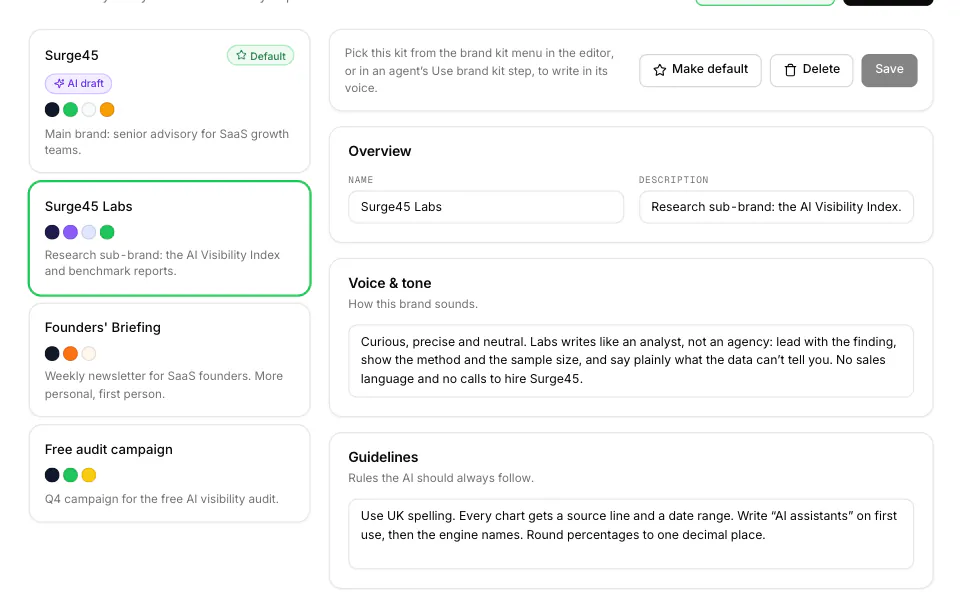
One brand rarely has one voice. A product line, a sub-brand or a campaign each needs its own tone, rules and examples. WriteWorks keeps an AI brand kit for each one in Context, and every AI feature writes with the default kit unless you pick another. Choose the kit in the editor, or in an automation's Use brand kit step, and the draft is written in that kit's voice.
7-day trial · Cancel anytime
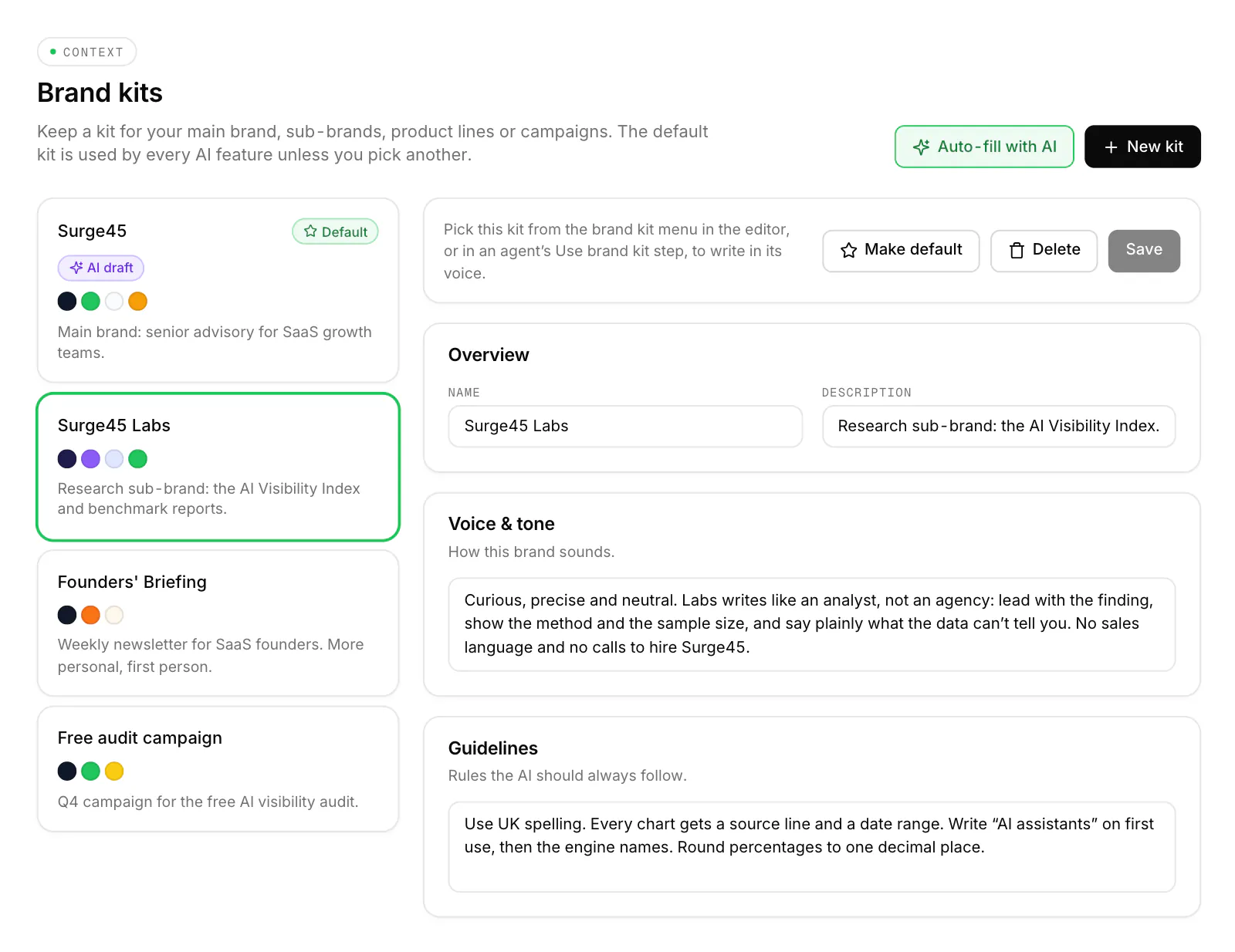
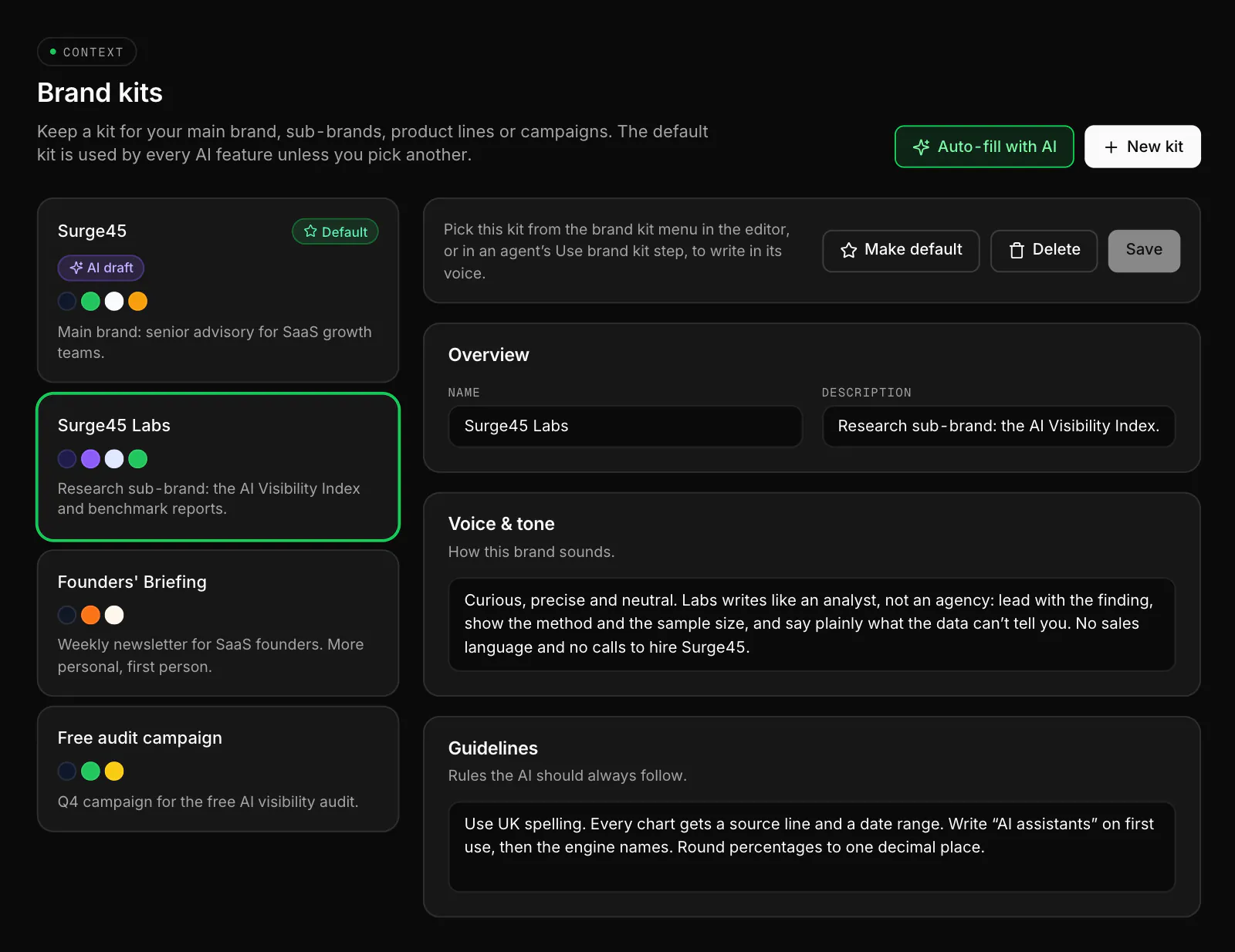
This is the working product, not a mockup: the same visibility scores, briefs and published content your team would be looking at. Start a free trial and point it at your own domain, or take the tour of what sits behind the screen.
Sub-brands, products and campaigns don't all sound the same.
A single brand profile forces the enterprise product, the consumer app and the seasonal campaign to sound the same.
Without a saved kit, writers paste the same do's, don'ts and sample copy into prompt after prompt, and drift when they forget.
Logos, colours and fonts sit in a design file the AI never sees.
Brand mentions inside AI answers rarely surface in analytics, so the work can't be tied back to revenue.
Save a kit, set a default, pick a kit where you write.
Each brand kit holds a name and description, voice and tone (how this brand sounds), guidelines (rules the AI should always follow), do and don't lists, sample copy the AI uses as a style reference, and a visual identity with a logo, colours and fonts.
The default kit is built from your brand profile when you start, so every AI feature has a voice from day one. Add more kits alongside it; at least one is always kept.
In the editor, the brand kit menu shows which kit the AI is writing in and lets you switch. In automations, a Use brand kit step sets the kit for that run.
AI Auto-fill drafts every empty field from your website and marks each one as drafted by AI for review. Nothing you've written is overwritten. Owners and admins can run it, and it uses AI tokens from your plan.
What each brand fixed, measured before and after with the same audit, in their own words.
“Our job pages used to reach AI crawlers as a "Loading jobs..." placeholder. One rendering fix later, the share AI crawlers can read has gone from 5% to 100%, and every job page now names itself with a proper heading.”
Everything the AI reads before it writes.
How this brand, product or campaign sounds.
Rules the AI should always follow.
The phrases and habits to use and avoid.
An on-brand example the AI uses as a style reference.
Logo, named colours with hex values, and fonts by role.
Choose the kit in the editor or an automation step.
The right voice, chosen in one click.
Brand kits in Context.
Teams with more than one voice to keep.
A brand kit for each product line, one workspace.
Rules, examples and identity held where the AI reads them.
A temporary voice that every draft in the campaign follows.
Kits per client brand, inside each client's own organisation.
“We're a booking marketplace, so listings are everything. Since the fixes, pages fully readable without JavaScript went from 84% to 98%, our sitemap dates finally mean something, and our full llms.txt file is real. Over a third of our audited category pages now list their businesses as structured data, with the remaining markets up next.”
Fhresh team
Read the full storyEverything teams typically ask before getting started.
Related solutions, adjacent use cases, and platform features.
Voice, rules, examples and identity, saved per kit and chosen per draft, in the editor and your automations.



 Google Search Console
 Google Analytics 4
 Google Ads
 Ahrefs
 Semrush
 DataForSEO
 Firecrawl
 Tavily
 Exa
 Parallel
 G2
 WordPress
 Webflow
 Contentful
 Sanity
 Payload
 BaseHub
 Framer
 Notion
 Gamma
 v0
 Slack
 Linear
 Atlassian
 Monday.com
 Granola
 Klaviyo
 Customer.io
 OpenAI Ads
 Claude and MCP clients